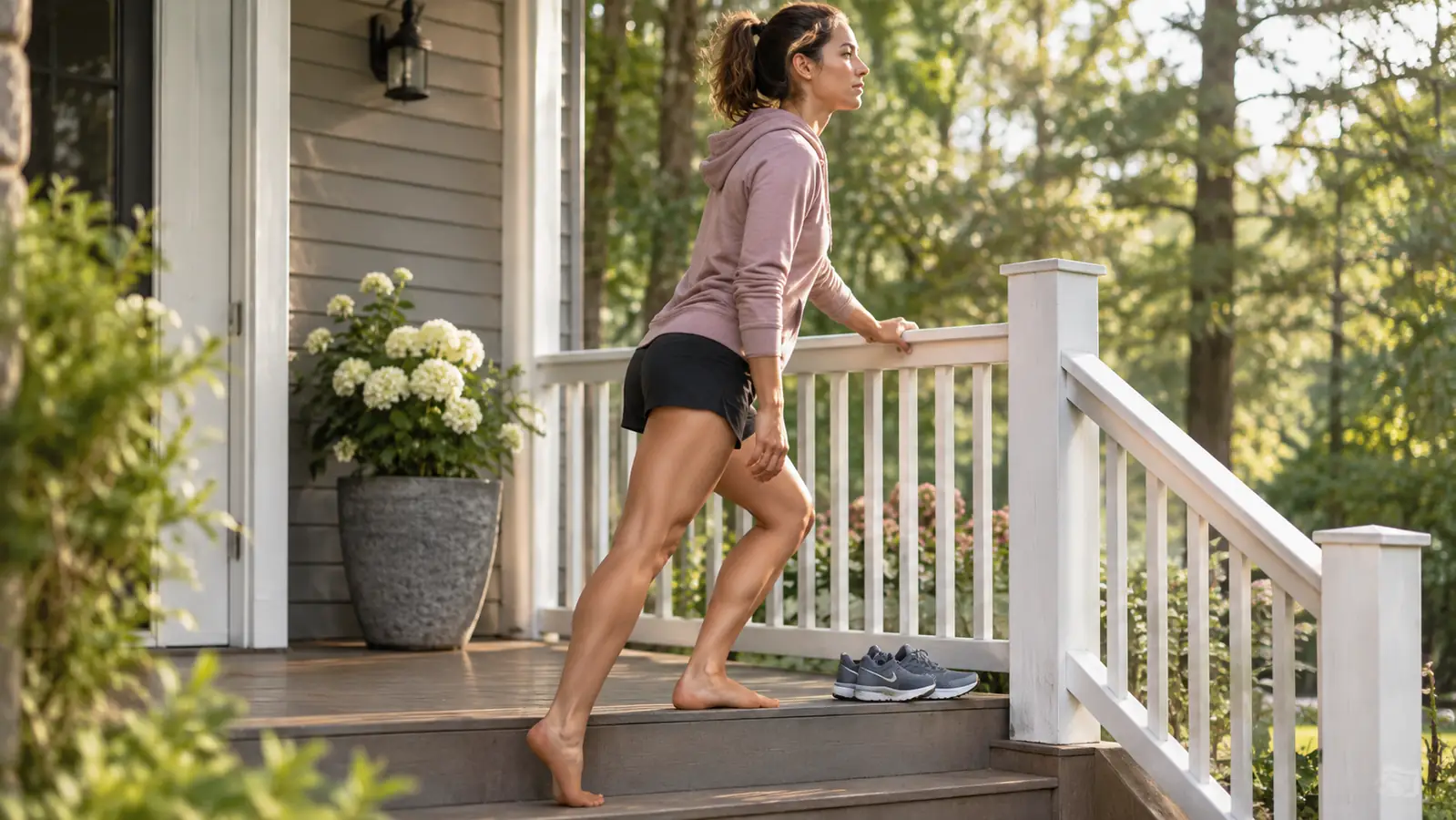
My calves are the part of me that files the complaint after every walk. I am 54, I have been a dental hygienist for 26 years, and I walk about three miles most mornings before the heat settles over Greensboro. My upper back and right shoulder have their own history from leaning over a dental chair, but the calves are the reliable complaint. By the time I sit down with my coffee they feel like two knotted ropes. For years I ignored it. I figured sore calves were the price of walking, the same way tight shoulders were the price of the job. Then Glenn's golf partner handed me a TOLOCO Massage Gun to borrow for a month, and the routine below is what came out of it.
What I got wrong at first was the timing. I used to stretch for thirty seconds at the mailbox, come inside, and wonder why the tightness was back by lunch. What actually helped was a short session with a percussion massager, either later in the morning or in the evening, after the muscle had cooled down and I had stopped moving. The TOLOCO is the one that stayed in my house after the borrowed month ended, and what keeps it in the living room is not a feature list. It is that the motor is quiet enough to use while Glenn has the television on, and at 2.1 pounds it is light enough that my hand does not quit before my calf does.
The calf is where this one earns its spot beside my recliner
Ten massage heads, 12mm of penetration, and a motor quiet enough to run during the evening news. That combination is why it stays out instead of living in a drawer.
Amazon Check Today's Price on Amazon →Step 1: Let the muscle cool down before you touch it
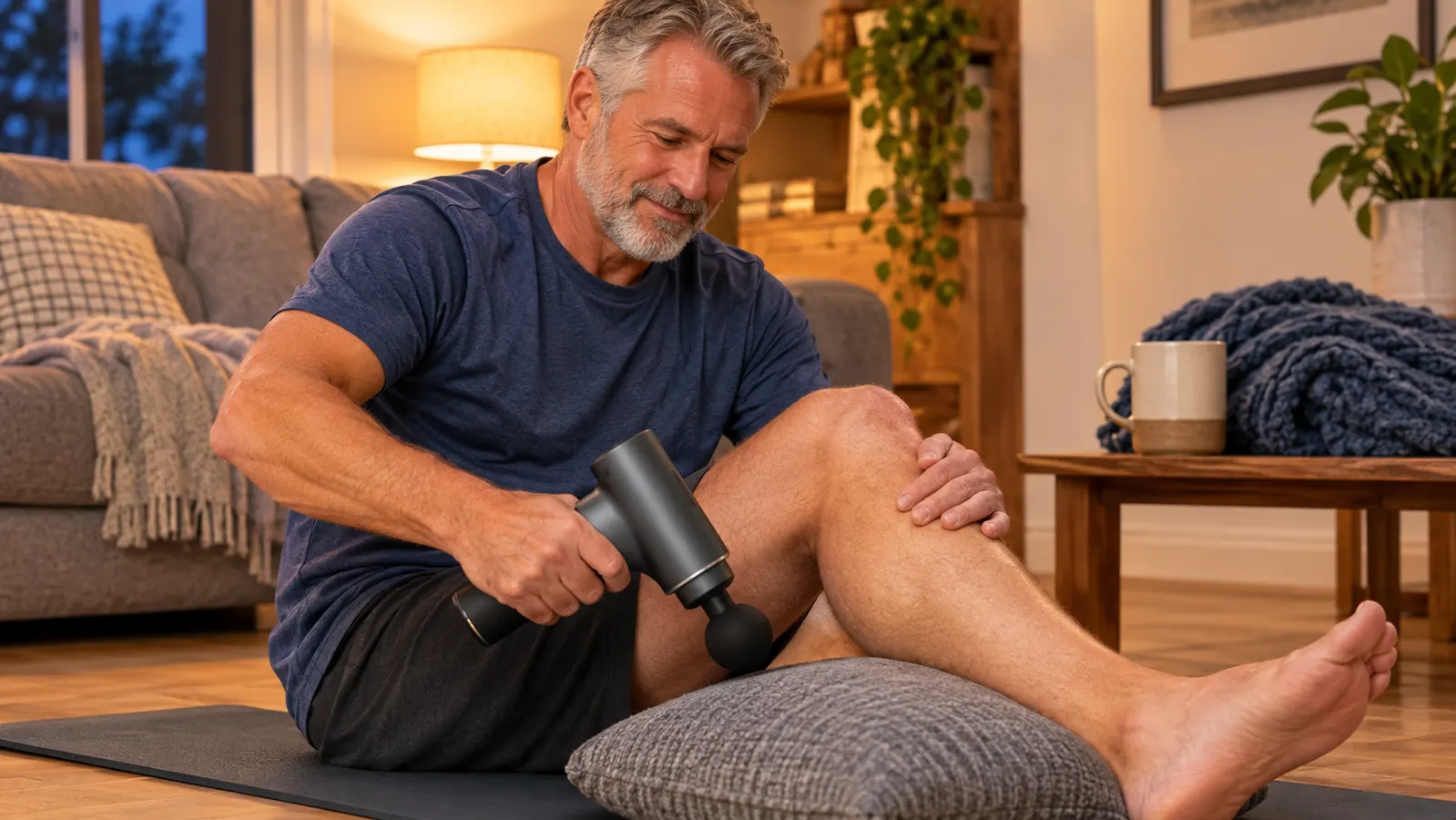
You just walked in the door. Your calves are warm, your shoes are off, and the instinct is to grab the tool right away. I did that for a month and it did not feel better than waiting. Give it fifteen or twenty minutes. Drink a glass of water. Trade the walking shoes for slippers. Put your feet up and let your breathing come back down to normal. Then sit somewhere you can prop the leg on a cushion, because you are about to hold the tool in place for a few minutes and you want your arm supported, not hanging in the air.
The first thing a tired calf needs after a walk is not more input. It needs blood flow and a few minutes of nothing. I am not a massage therapist, a physical therapist or a doctor, and I say that plainly because I do not want this read as medical advice. I am a hygienist with sore calves who found a routine that works for her. If a calf is swollen, hot to the touch, bruised, or sore in one small spot that hurts when you press it, skip the tool and call your doctor. That is not a case for percussion, and no amount of good technique will fix it.
I time the whole thing around my coffee now. Walk, shoes off, water, coffee, then fifteen minutes of sitting before the tool comes out of the canvas basket. That gap is the difference between a routine I keep and a routine I abandon by the second week. It is not discipline. It is just a better order of operations.
Step 2: Use the round head and start lighter than feels useful
The TOLOCO comes with 10 massage heads, and for calves I reach for the round one almost every time. The flat head is fine on the wider part of the muscle, but the round one follows the curve of the calf so I do not have to press to keep contact with it. Start there and leave the pointed heads in the case for now. Glenn uses a different head on his hips after golf, I use one of the wider ones on my upper back, and nothing in the set sits unused for long.
Here is the part I got wrong first. I leaned in hard, because more pressure sounded like more relief. The TOLOCO is rated to 3200 rpm with 12mm of penetration, and driving that into a calf with your body weight behind it feels like being thumped with a knuckle. Start with the head just resting on the muscle and let the motor do the work. Add a little pressure only once you notice you are relaxing into it instead of bracing against it. If your toes curl, that is not proof it is working. It is a sign to ease off.
The noise matters more than a spec sheet suggests. It runs around 40 to 50 decibels, so I can use it in the living room while the news is on and we can still talk over it. A quiet tool is a tool you actually pick up. The loud one I borrowed from a friend before buying this stayed in the closet, and I never once missed it.
Step 3: Work in strips and stay off the bone
Think of the calf as two long pieces of muscle, one on the inside and one on the outside, with a hard bone running down the front of the shin and a soft hollow behind the knee. The tool goes on the muscle. It does not go on the shin bone, and it does not go into the back of the knee where everything is close to the surface. I learned that the hard way and had a tender spot for two days afterward, which is a slow way to learn something that should have been obvious.
Work in slow strips, from just below the knee down toward the ankle, one pass at a time. Give the inside half about thirty to forty-five seconds, then the outside half the same, then go back and spend a little more time on whichever spot complained loudest. Keep the head moving the whole time. Do not park it and lean in. Parking is how you end up sore in a brand new place and spend the evening wondering what you did.
Three to five minutes per calf is plenty. Both legs is eight to ten minutes, about one episode of something. I use the yoga mat on the bedroom floor when I want a better angle on the back of the calf, and the recliner with a cushion under the leg when I am tired. Both work. The recliner wins more often than I would like to admit.
Step 4: Move the ankle and stretch while the muscle is warm
After the tool, the muscle is warm and more willing to move. That is the moment for ten slow ankle pumps, then a standing calf stretch with both hands on the kitchen wall. Back leg straight, heel down, thirty seconds. Then bend the back knee slightly and hold another thirty. Two rounds and you are finished. It takes less time than reading this paragraph.
Stretching cold, right after a walk, used to get me nothing but a sharp pull and a bad mood. Stretching after the tool is different. The stretch goes further without that pinch at the back of the ankle, and I can hold it without holding my breath.
Do not turn this into a workout. The goal is to leave the muscle looser than you found it, not to find out how far you can push before something protests. If a stretch feels like a pinch instead of a pull, come out of it, shake the leg out, and try again tomorrow. There is no prize for finishing the stretch.
Step 5: Keep sessions short and repeat them in the evening
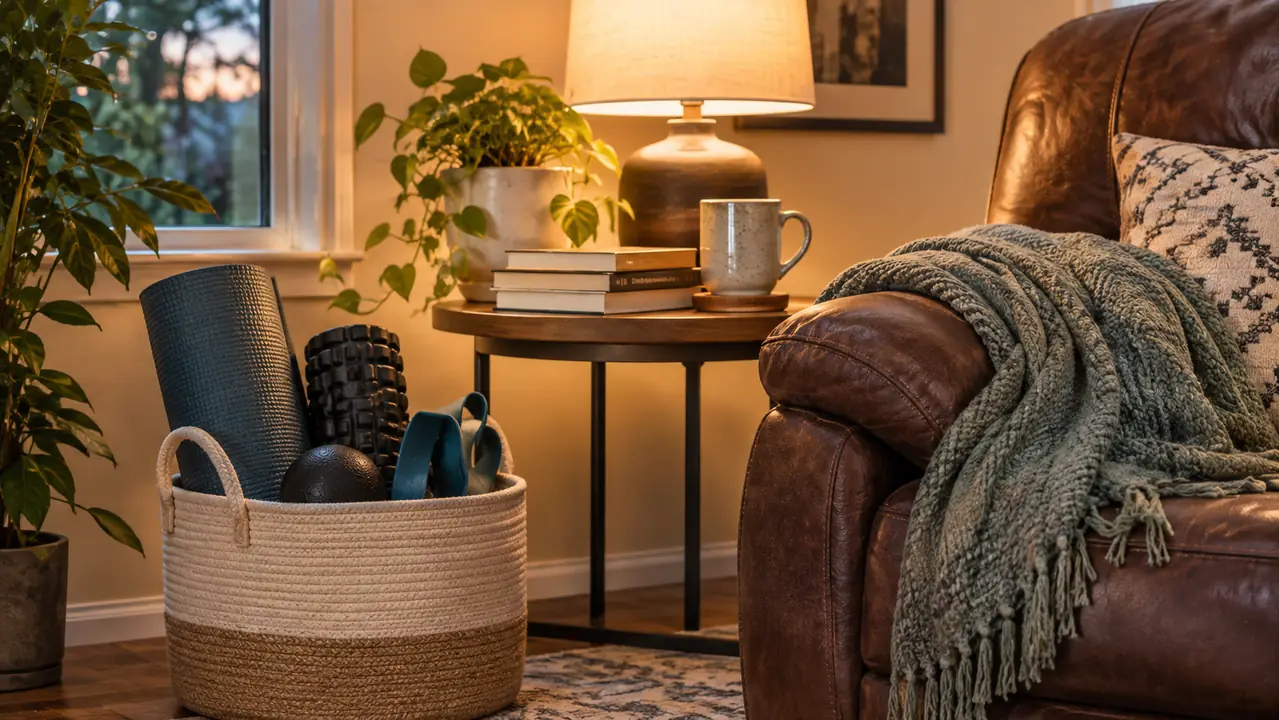
The version of this I actually keep is five to eight minutes per leg in the morning after my walk, plus a shorter pass in the evening on days that involved gardening or a lot of stairs. The tool is battery powered and rechargeable, so it lives in the canvas basket beside the recliner with the USB cable coiled underneath it. I charge it about once a week. If I am honest, I charge it when it starts to slow down, which is not the same thing, but it has not quit in the middle of a session yet.
Consistency beats intensity. Three short sessions spread across a week did more for my calves than one long session on a Sunday afternoon. The same turned out to be true for my upper back and right shoulder, which is the area that drove me to buy the tool in the first place.
Keep a note if you are the type. I am not, but I do notice the mornings after I skip. Three days in a row without it and my calves are back to knotted ropes by the second mile, and I spend the rest of the walk thinking about my legs instead of the trees or the neighbor's garden.
What Else Helps
Shoes matter more than I wanted them to. I walked for a whole season in a pair that was two years old and worn down on the outside heel, and my calves stayed tight the entire time. A newer pair with the support still intact changed how the walk felt. Boring answer, right one.
Water, sleep, and not adding distance all at once are the other three. I added a mile too fast one spring and spent a week paying for it. Now I add a quarter mile and hold it there for a while before adding more. Glenn does the same thing with his golf game, though he would rather not hear it from me.
Heat helps me on cold mornings. A warm shower before the session, or a heat pack on the calf for ten minutes while I have my coffee, makes the first pass with the tool feel less like a conversation with a bruise. I do not put heat on anything that is swollen, and I do not leave a heat pack on and forget about it.
And the tool is for muscle soreness, not for an injury. If soreness lasts more than a few days, if it is worse in the morning than it was the night before, if there is swelling or heat in the calf, or if the pain sits in one small spot and does not move, put the tool down and see a professional. That is the paragraph I would want read twice.
Parking the head and leaning into it is how you end up sore in a new place. Keep it moving, keep it short, and go back to the spot that complained.
Your calves do not need a longer walk, they need five minutes after it
Round head, light contact, strips down the muscle, then a stretch. That is the entire routine. The TOLOCO is the tool I use for it, and it is the one that stayed after the borrowed month ended.
Amazon Check Today's Price on Amazon →