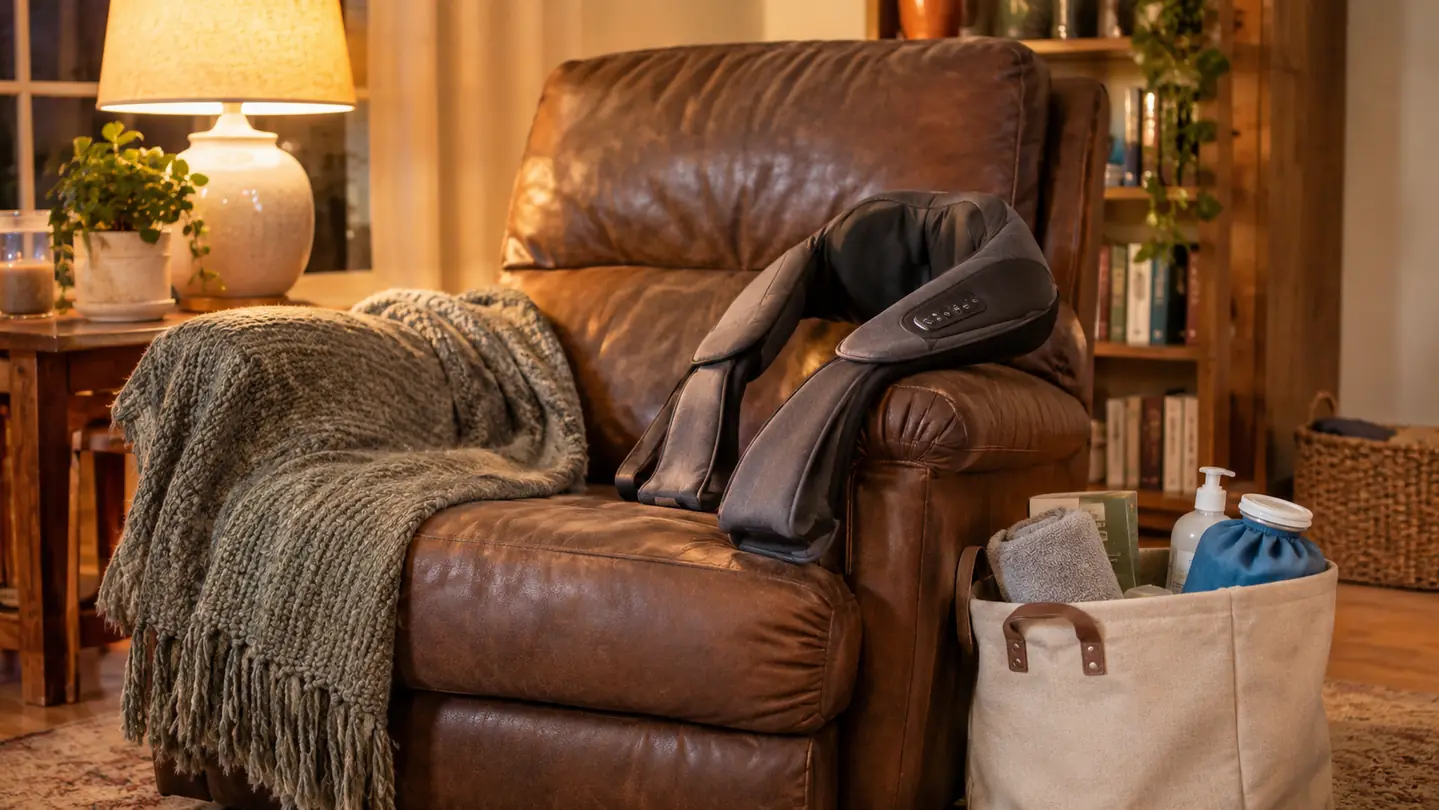
For years my answer to a tight upper back was the same. Plug in the heating pad, drape it over my shoulders, lean back in the recliner and wait. I am 54 and I have spent 26 of those years leaning over a dental chair, so my neck, right shoulder and upper back have opinions about how I spend my days. The pad helped. It just helped in a blurry way, the way a hot shower helps. I have had the same one for six years. It is a rectangle about the size of a bath towel folded in half, it takes close to ten minutes before it feels properly warm, and the cover has gone soft and slightly pilled where my shoulders press into it. On a Thursday in March, after a day of six patients with heavy buildup, I sat under it for forty minutes and stood up exactly as tight as I sat down. When the Mo Cuishle Shiatsu Neck and Back Massager joined the canvas basket beside my recliner, what surprised me was not that it worked. It was how specifically it worked, and how clearly it showed me the difference between warming a sore area and actually working on it.
So here is the short answer before the long one. If you can put a finger on the spot that is bothering you, the Mo Cuishle does something a flat heating pad simply cannot. Sixteen kneading nodes press and rotate through the tissue while gentle heat runs alongside them, and you pick slow, medium or fast, with a button that reverses the direction when the same pattern starts to feel like nothing. If your ache is broad and vague, spread across the whole upper back with no single centre, a plain heating pad is still the better tool. It wraps a wide area in steady warmth and asks nothing of you. I use both. Which one I reach for depends on whether I can point at the problem or only wave in its general direction. I should say plainly that I am not a massage therapist or a physical therapist, and nothing here is a diagnosis. This is what a couple of years of evenings in a recliner taught me about which tool to pick up first.
| Mo Cuishle Shiatsu Massager | Plain Electric Heating Pad | |
|---|---|---|
| What it does | 16 kneading nodes work the muscle while gentle heat runs alongside | Steady warmth and nothing else, no movement |
| Kneading and pressure | Rotating nodes at slow, medium or fast speed, plus a direction button | No kneading or pressure, only warmth |
| Heat | Gentle heat that runs with the massage, not a setting you linger under | Broad, sustained warmth you can settle into for a long stretch |
| Area covered | A wrap-around form sized 12 x 4.3 x 7.28 inches that sits at the neck and upper back | A large flat surface that covers a wide stretch of the back |
| Staying where you put it | Rests on the shoulders by itself, needs a hand on the lower back | Lie on it or drape it and it stays put |
| Noise | A soft motor hum while it runs | Silent |
| Learning curve | Took me two evenings to find the angle that felt right | Plug in, lie down |
| Where it works | Neck, shoulders, lower back and calves, listed for whole body use | Back, shoulders, abdomen, anywhere the pad lies flat |
| Adjustability | Three speeds plus a direction change | Position only |
| Session length | Fifteen minutes is plenty before it stops feeling good | Can stay on much longer while you read |
| Returns and replacement | 30-day money-back guarantee and a one-year replacement policy | Varies by maker |
Where Mo Cuishle Wins
The first thing the Mo Cuishle does that a pad cannot is move. Heat relaxes a surface. Kneading nodes work into a spot from two directions at once, and that pressing and rolling is what reaches the knots I get at the top of my right shoulder blade after a day of scaling and polishing. The knot I mean is roughly the size of a walnut and it sits about two inches to the right of my spine, just above the shoulder blade. I found it with my thumb one night and could not believe how much of my day it accounted for. Under the nodes it takes about four minutes on slow before it stops arguing, and when it finally lets go I feel the release in my jaw, which I did not expect the first time. I have never once had that from a heating pad. I run it on slow for the first few minutes, because medium feels like a lot when the muscle is already irritated. Then I move up. On a bad night I use fast for the last three or four minutes and press the direction button to reverse the rotation, which stops the tissue going numb to one pattern.
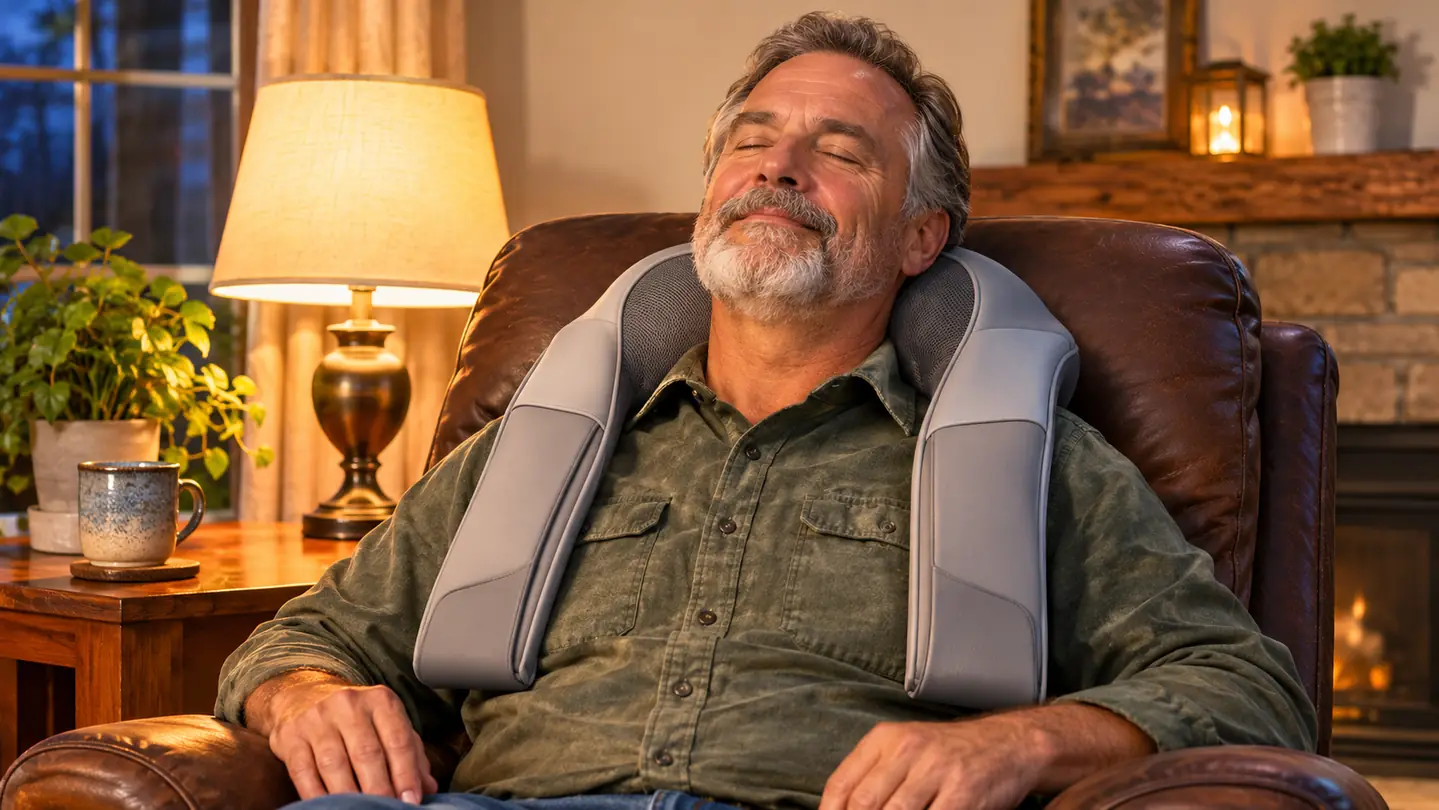
The second advantage is aim. A heating pad is a flat rectangle, so it warms whatever it happens to be lying on, and the warmth fades at the edges. The Mo Cuishle is a wrap-around form that sits at the neck and upper back, roughly 12 by 4.3 by 7.28 inches and about 2.2 pounds, so I can park it on the exact place that hurts and leave it there. That is also why it works down the body. The maker lists it for whole body use, and I have used it on my lower back after a weekend in the garden and on my calves after my three mile morning walk. On the mat in the bedroom I lie on my side and let it work the outside of each calf for five minutes, one leg and then the other, and that is the one place it beats every other tool in the basket. A pad that only lies flat on a bed does not follow me to those places.
The third thing is control. Three speeds and a direction button sounds like a short feature list until you have used a tool that has one setting and only one. Some evenings the muscle wants a light pass. Some evenings it wants to be worked. Having both in one device means I stop talking myself into the stronger option and then regretting it. The first week I got this wrong. I went straight to fast on a shoulder that had been tight for three days and it felt like being scolded. Slow first, then build, is how I use it now, and it is the single thing I would tell a friend before they switch it on.
Sixteen nodes on slow reached the knot at the top of my right shoulder blade in a way that years of draping a heating pad over it never did.
Where a Plain Heating Pad Wins
Now the honest half. When the ache has no centre, the pad wins and it is not close. My upper back after a long Saturday of gardening is a wide, dull, everywhere kind of sore, and working a pair of nodes around it for fifteen minutes does not touch the whole of it. Two Saturdays ago I spent four hours on my knees edging beds and hauling mulch bags, and by eight in the evening my whole mid back was one flat complaint from the shoulder blades down to the waist. I tried the massager first because it was already out of the basket. Fifteen minutes later the one spot under my right shoulder blade felt better and everything else was exactly as it had been, so I put it away and got the pad. That is the pattern between these two. The massager fixes a point. The pad covers a field. A heating pad laid across the back of the recliner wraps the entire area in steady warmth and I can sink into it and stop thinking. There is no technique to it, no angle to find, no speed to choose. That absence of decisions is the whole point on a night when I am already tired.
The pad is also silent, and it stays where I put it. The Mo Cuishle hums while it runs, a soft motor sound I stop noticing after a minute but that Glenn finds distracting if he is watching something in the same room. And the massager needs a hand on it when I use it on my lower back. Around the neck it rests on the shoulders well enough, but on the lower back I am holding it in place, which means I am not relaxing, I am operating something. A pad on the hip does not need an operator. It also does not need a particular chair. I can drape it over the arm of the recliner, fold it behind me on the couch, or lay it across the foot of the bed while I fold laundry, and it behaves the same in all three places.
Then there is duration. Fifteen minutes is my limit with the massager, and that is a sensible limit rather than a flaw. Working the same tissue for longer stops feeling good. A heating pad I can leave on much longer while I read, which makes it the better choice on evenings when the goal is not to fix anything but to unwind before bed. Glenn borrows it after golf for his hips, and he would not sit still for a massager on the couch. He is 58 and retired, and after eighteen holes his lower back and left hip are the complaint. He tried the massager once, on medium, and handed it back inside a minute saying it was too much after a hot afternoon. Fair enough. He is not wrong, he is a different user. He wants warmth and quiet and the tournament replay. That is a heating pad job, and I am not going to argue with him about it.
If you can point to the knot, this is the tool built to reach it
Sixteen kneading nodes, three speeds and a direction button, with gentle heat running alongside. Mine lives in the basket by the recliner and gets used most evenings.
Amazon Check Today's Price on Amazon →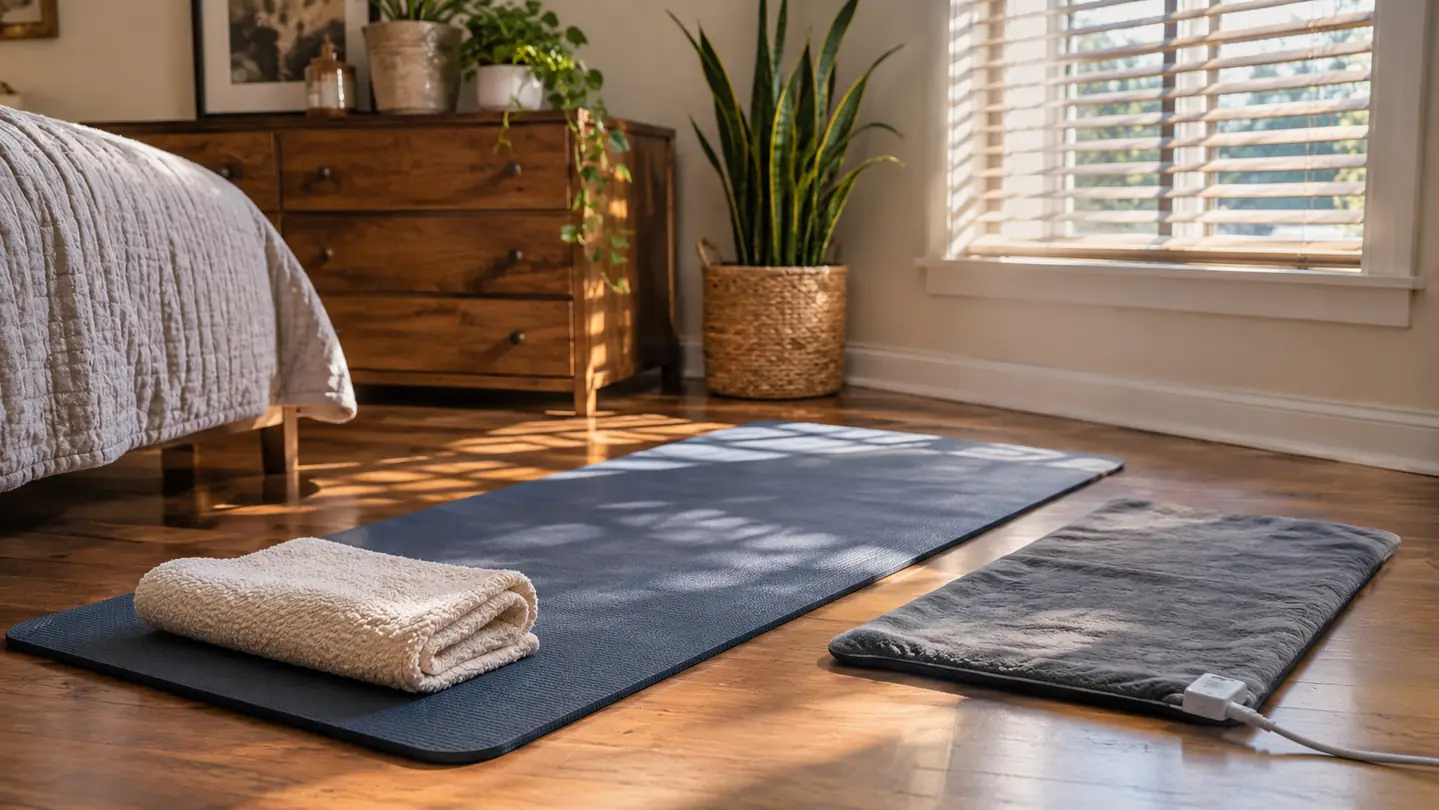
How I Use Them Together
In practice the two tools split my evenings cleanly. The massager comes out first, right after dinner, while I am still upright and paying attention. Fifteen minutes on the neck and right shoulder, slow then medium, sometimes fast at the end, and the direction button when the pattern stops feeling like anything. Then the pad goes across my back while I read in the recliner, and I stay there until I am sleepy. The massager does the specific work. The pad does the general softening. Doing them in that order is better than either one alone, which is not the answer I expected to arrive at when I first plugged the massager in.
I got the order wrong at first. I started with the pad because it was easier, sat under the warmth for half an hour, and then the massager felt like too much effort, so it stayed in the basket for a week. The nights I actually use it are the nights I do it first, before I am settled and sleepy. There was a learning curve I did not expect either. The wrap-around form wants to sit with the nodes to either side of the spine rather than directly on it, and my first two evenings I had it too high, up at the base of my skull, which was uncomfortable rather than useful. Moving it down about an inch fixed it. The power cord is the other thing to plan around, since it needs a wall outlet. My recliner has one behind it and the far sofa does not, so the massager lives by the recliner and takes short trips to the yoga mat on the bedroom floor. If you buy one of these and it ends up in a cupboard, my guess is it got scheduled after the easy thing instead of before it. Mine sits in a canvas basket within arm's reach. That is the only reason it gets used, and it is the cheapest improvement I have made to the whole routine.
Who Should Buy Which
Buy the Mo Cuishle if you have one or two spots you can point to, if the tightness returns to the same place after the same kind of day, and if you are willing to spend fifteen minutes paying attention to an angle and a speed instead of lying under something. It suits the neck and shoulders particularly well because the wrap-around form sits there on its own without a hand holding it. It is also the better pick if you want one tool that covers more than the back, since the maker lists it for whole body use and I have had good results on calves and lower back. The 30-day money-back guarantee and the one-year replacement policy make it a low-risk thing to try, which matters when you are buying a device you have not touched.
Stay with a plain heating pad, or buy one first, if your soreness is wide rather than pointed, if you want to doze off reading rather than work on something, or if the person using it is not going to operate a device. Glenn is the clearest case in this house. He wants warmth on his hips after eighteen holes and no decisions at all. A pad is also the better choice when a problem has been around for weeks and no professional has looked at it yet. Warmth is a reasonable thing to do while you wait for an appointment, and it is not a diagnosis. Either way, if something is injured rather than tight, check with your doctor before you put heat or a massager on it. That is not caution for its own sake. It is the difference between a sore muscle and something that needs a different kind of help.
One sore spot, fifteen minutes, most evenings
The Mo Cuishle is the tool I reach for on the nights when I know exactly where the problem is. If that sounds like your evening, it is worth a look.
Amazon Check Today's Price on Amazon →