By eight in the evening, my feet tell me exactly what kind of day I had. Twenty-six years of leaning over a dental chair left me with a tight upper back and a right shoulder that complains by Friday, and the three miles I walk most mornings in Greensboro have made my feet the loudest part of the whole arrangement. My arches ache. My heels feel bruised. My calves are tight enough that I notice them on the stairs, and by the time the dishes are done I want to sit down and stay there.
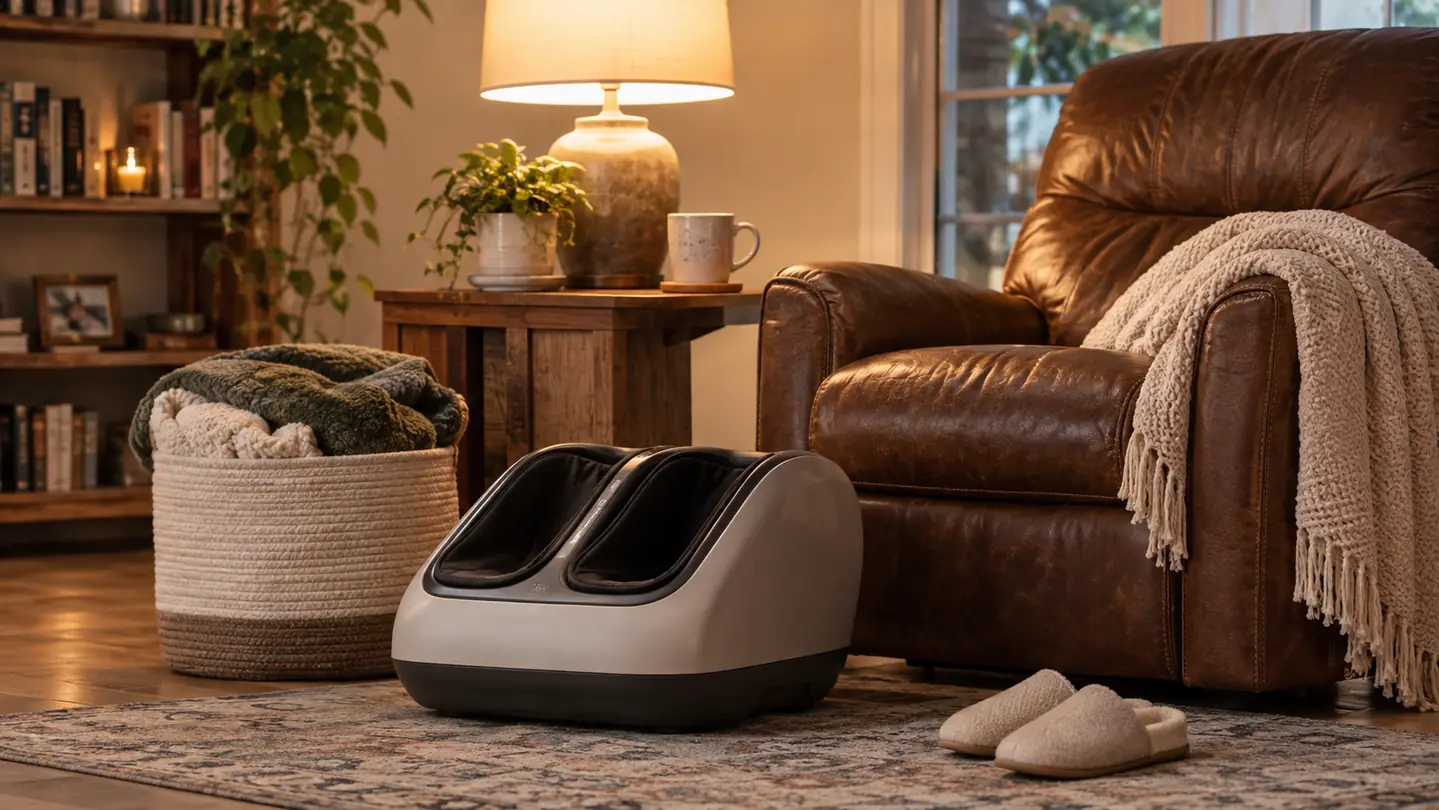
I tried the cheap fixes first. A basin of warm water that goes tepid in ten minutes. A frozen water bottle rolled under my desk, which is exactly as pleasant as it sounds. A tennis ball I kicked across the kitchen twice a night. Every one of them helped for about as long as it took my feet to dry. What I needed was something that lived in the living room and worked while I was already sitting down, which is how the Nekteck foot massager ended up in the canvas basket beside my recliner.
I am 54, I have been a dental hygienist for 26 years, and I am not a massage therapist, a physical therapist or a doctor. Nothing here is medical advice. What follows is the routine I actually use, including the parts I got wrong for the first few months, and the signs that mean you should put the machine down and call someone who knows more than I do.
Your feet do not need an appointment. They need fifteen minutes.
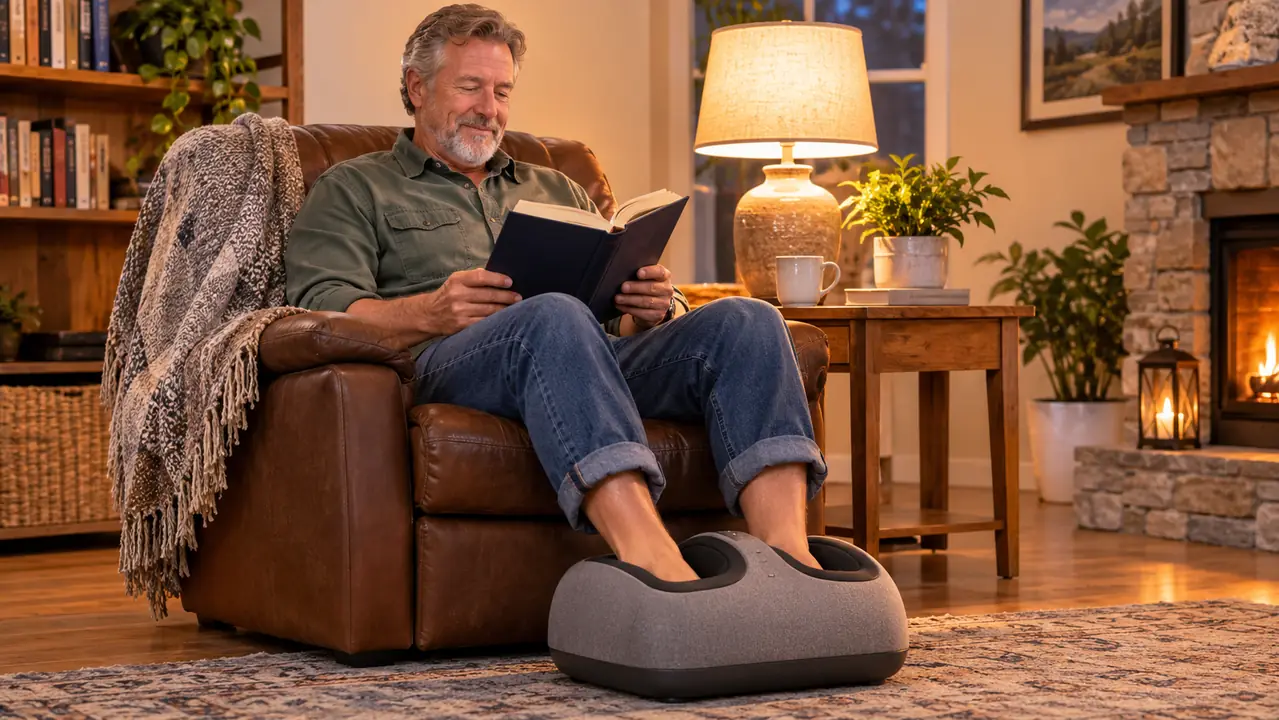
The Nekteck foot massager lives on the floor by the recliner, kneads with 6 massage heads and 54 rotating nodes, and warms up while you finish your tea. I turn mine on with my toe and never look up from my book.
Amazon Check Today's Price on Amazon →The Five Steps I Actually Follow
Step 1: Put it where you already sit, and leave it there
The unit measures 15.75 inches wide, 14.17 inches deep and 3.15 inches tall, and it weighs 6.79 pounds. That is small enough to live beside a chair and heavy enough that you will not want to carry it up and down the stairs every night. It is corded electric, so the one thing that actually matters is an outlet within reach. I moved a floor lamp about a foot to the left, plugged it in, and that was the whole installation.
Here is what I got wrong for the first two weeks. I treated it like a special occasion. Down to the bedroom one night, out to the couch the next, onto the porch when the weather was nice. What turned it into a habit was almost embarrassingly simple: it stayed in one place. Now it sits on the floor beside the recliner, and the only decision left at the end of the day is whether to put my feet in it, not where the machine is.
It is a stationary machine with a plastic shell that wipes clean with a damp cloth, and the cord means it is not going to wander off. Pick the spot you already land in after dinner, and let that be the spot.
Step 2: Heat first, then feet, and start at ten to fifteen minutes
The unit has a heating function, and I switch it on a minute or two before I sit down so the surface is warm by the time my shoes are off. Warm, not hot. In a year of use I have never once wished it were hotter, which surprised me, because I am the person who asks for the hot stones at the spa.
The first night I ran it for twenty-five minutes because it felt good and I was in the middle of a chapter. By Thursday my soles were tender in the specific way that means something was pressed a little too long. Fifteen minutes is my number now. Long enough that my calves let go, short enough that I am not sore the next morning. If you are starting out, begin at ten and work up.
The machine shuts itself off, which has bailed me out more than once when I fell asleep in the recliner with a magazine on my chest. I do not rely on it, but I am glad it is there, and I would not buy a heated machine without that feature.
Step 3: Get your heels all the way back
For my first month I sat with my feet halfway in and wondered why the whole thing felt like nothing. The massage heads sit down inside the housing, and if your heels are not all the way back, your arches never reach them. Heels back, soles flat, feet relaxed. It is a kneading action rather than a vibration, so it feels like a thumb pressing along the arch and rolling toward the ball of the foot. If you are ticklish, the first minute is going to be strange. It passes.
The kneading comes from 6 massage heads carrying 54 rotating nodes between them. In plain terms, there is a lot going on in there. My feet are narrow and I still felt covered from heel to toes, with no spot left out.
Take your socks off, obviously, and skip the lotion beforehand. The Nekteck unit is not water resistant, and I would rather not find out what foot cream does to a machine I use most nights.
One more note on timing. I use it once I am genuinely off my feet for the evening, not the minute I walk in the door. Ten minutes of sitting still first makes the whole session feel better than going straight from the front porch to the recliner.
Step 4: Reposition once for your heels and lower calves
The listing names the back, calf, feet, heel and leg as target areas, and I have used it on my lower calves by turning slightly sideways and resting the back of my leg across the opening. It reaches the lower calf, not the whole length of it, so I take about a minute there and then go back to my feet. It is not a stand-in for a real calf massage, and I would not pretend otherwise.
For heels, angle the foot so the heel sits directly over the heads and let it stay put for a minute. That is the spot that bothers me most after a long morning in the operatory, and it is the spot I would have skipped if I had not made a deliberate habit of it.
Glenn, my husband, plays golf most weekends and borrows it on Sunday afternoons for his feet and the bottom of his calves. He uses the same fifteen minutes and has never asked to read the manual, which tells you everything about how complicated the controls are.
Step 5: Reverse the direction, then know when to stop
There is a bi-direction control that reverses the kneading. I let it run one way for the first five minutes and then reverse it, mostly because the change is what makes my feet register that the session is happening. The machine is quiet enough that I can follow a show at normal volume instead of turning the captions on, and the power and heat are touch controls I can work with my toe without looking up from my book.
Stopping is the part nobody teaches you. If it feels sharp, or if you notice you are tensing against it, take your feet out. Sore but good is the target. Bruised is not. On a bad day I drape a thin towel over my foot for a few minutes to soften the pressure, and that is usually all it takes.
And if something is genuinely wrong, this is not the tool for it. Swelling, numbness, tingling, a joint that is hot to the touch, a fresh injury, or foot pain that wakes you up at night all go to a doctor before they come to a massager. I say that as a hygienist who spends her days telling people to get things looked at. I am not qualified to diagnose anything below the ankle, and neither is a machine.
I ran it for twenty-five minutes the first night because it felt good. By Thursday my soles were tender. Fifteen minutes is the number that works, and I have not needed to change it since.
What I Got Wrong in the First Month
I treated it as a treat instead of a habit. The nights I remembered to use it were the nights it happened to be in the way, maybe three times a week, and three times a week did nothing for calves that were tight every single day.
I also used it right after my walk, when my feet were still warm and slightly puffy from the pavement, and that felt like too much too soon. Now it is an evening thing, after dinner, once I have been off my feet for a while.
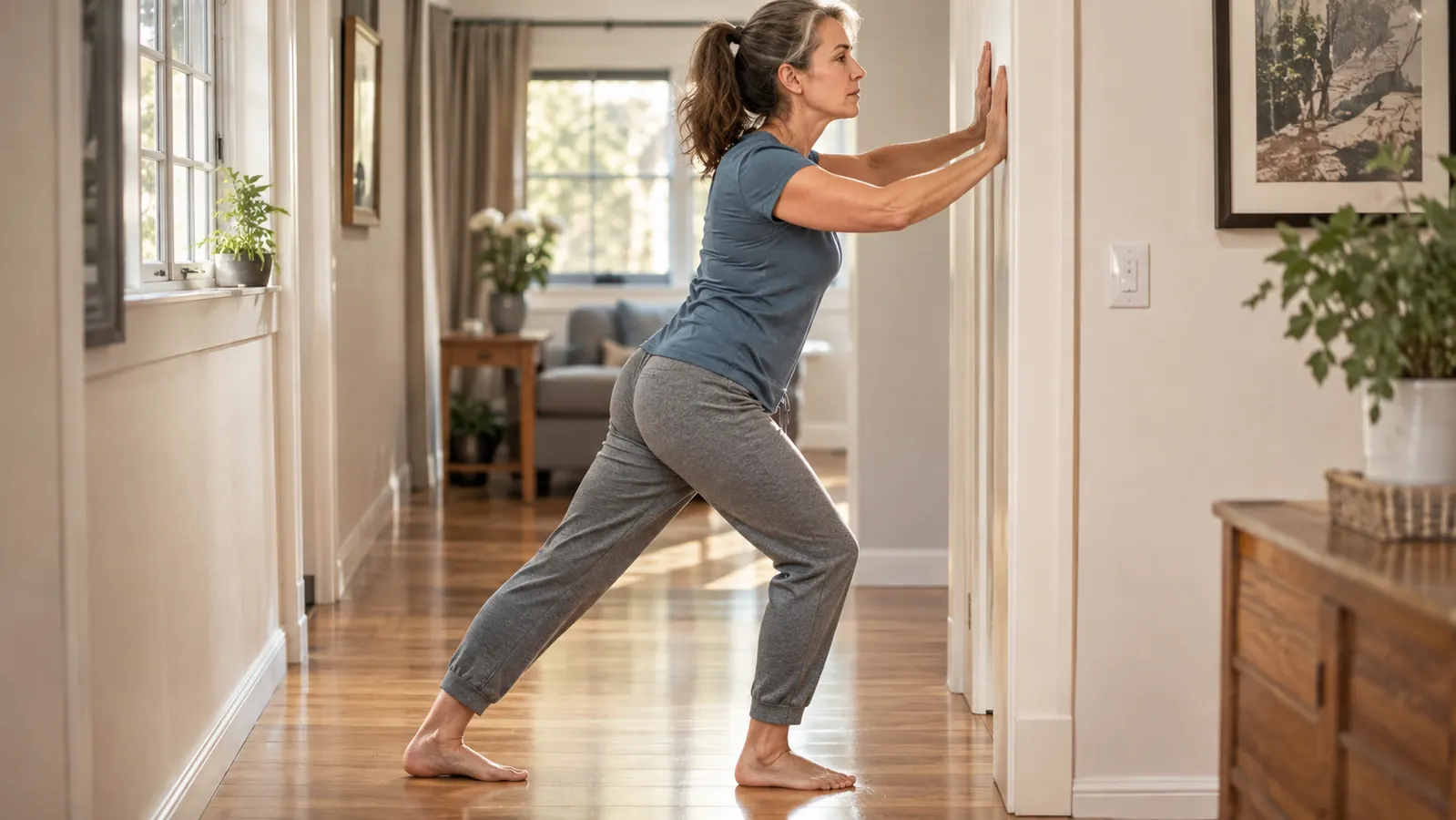
The last mistake was expecting it to handle my calves on its own. It loosens the lower calf. It does not stretch anything. Thirty seconds against a door frame does more for the top of the calf than fifteen minutes in the machine, and I wish I had figured that out in March instead of June.
None of these are reasons to skip it. They are the reasons the first month felt like not much and the second month felt like a routine. The machine was fine. My schedule was the problem.
What Else Helps
The massager is one piece of an evening, not the whole thing. What has mattered alongside it: thirty seconds of calf stretch against a door frame on each side, feet up on a pillow for ten minutes while I read, and a glass of water before bed. None of it is clever and none of it takes equipment. The consistency is the part that counts, and the machine is what makes the consistency easy, because it is pleasant enough that I look forward to it.
It also helps to put the machine where the habit already exists. Mine lives in the canvas basket by the recliner, which is where I land after the dishes. If I had to walk to another room to fetch it, I would use it on Sundays and forget about it the rest of the week. Glenn's version of the same rule is simpler: leave it plugged in. A machine that needs an extension cord is a machine that stays in the closet.
One more thing that surprised me is how much the warm-up matters. Switching the heat on and letting the unit sit for a minute before my feet go in makes the first thirty seconds comfortable instead of startling. It is a small change, and it is the difference between a session I finish and a session I cut short.
Fifteen minutes in your own chair, most nights
No appointment, no drive home in the dark. The Nekteck foot massager warms up, kneads with 6 massage heads and 54 rotating nodes, runs quiet enough to read by, and shuts itself off if you doze. It is the one recovery purchase I use without thinking about it.
Amazon Check Today's Price on Amazon →