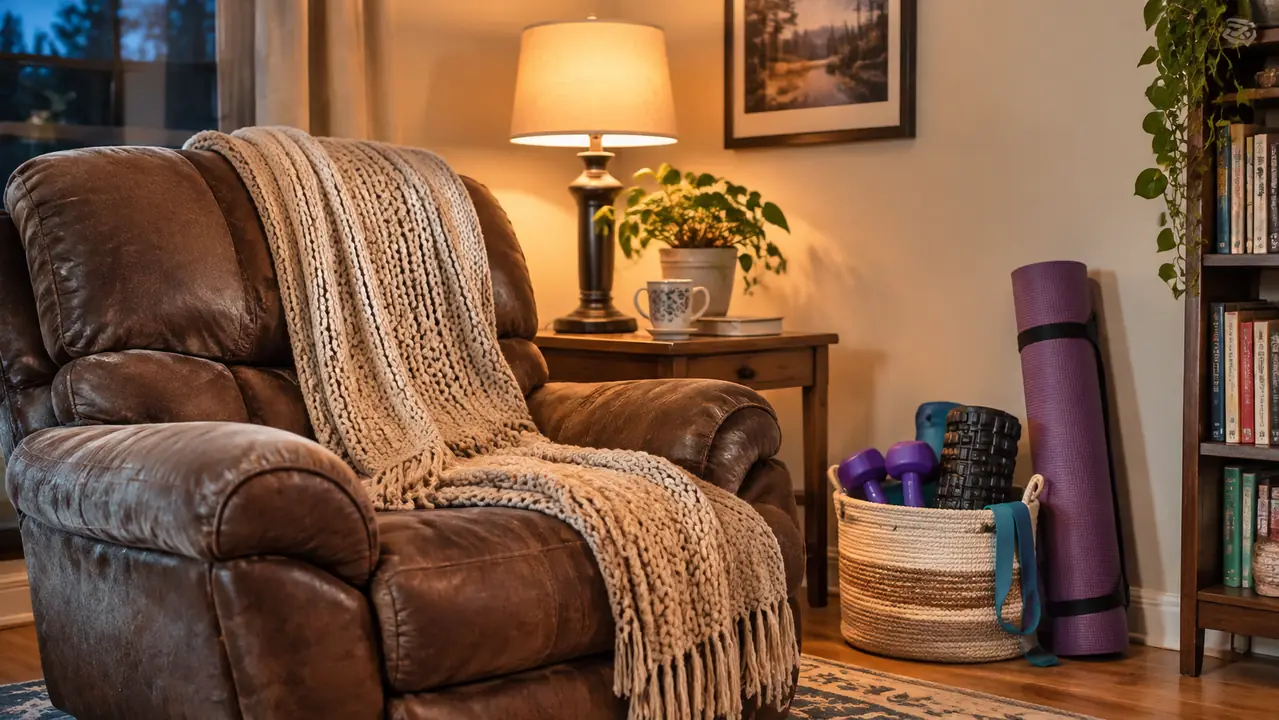
Twenty-six years of leaning over a dental chair will teach you exactly where your upper back ends and your patience begins. By the time I get home, my neck has that hot, tight feeling, my right shoulder sits an inch higher than my left, and the last thing I want is another chair. I tried the obvious things first: stretching at my desk, a tennis ball against a doorframe, a foam roller I never quite figured out. What finally stuck was a plain stretcher board I keep in the canvas basket by the recliner. The Magic Back Support stretcher is the one thing in that basket I reach for on a work night.
Here is what I am not going to tell you: that it fixed anything. I am a dental hygienist, not a physical therapist, and I do not hand out diagnoses. What I can tell you is what ten minutes on it feels like, how I worked up to that, and where it fits in a day that already has too much sitting in it. If that is the kind of day you have, these are the ten reasons it stuck for me.
Ten minutes, no outlet, no appointment
The stretcher I keep by the recliner is the Magic Back Support board. Adjustable levels, no power, about a pound and a half.
Amazon Check Today's Price on Amazon →It puts you in the opposite shape a chair does
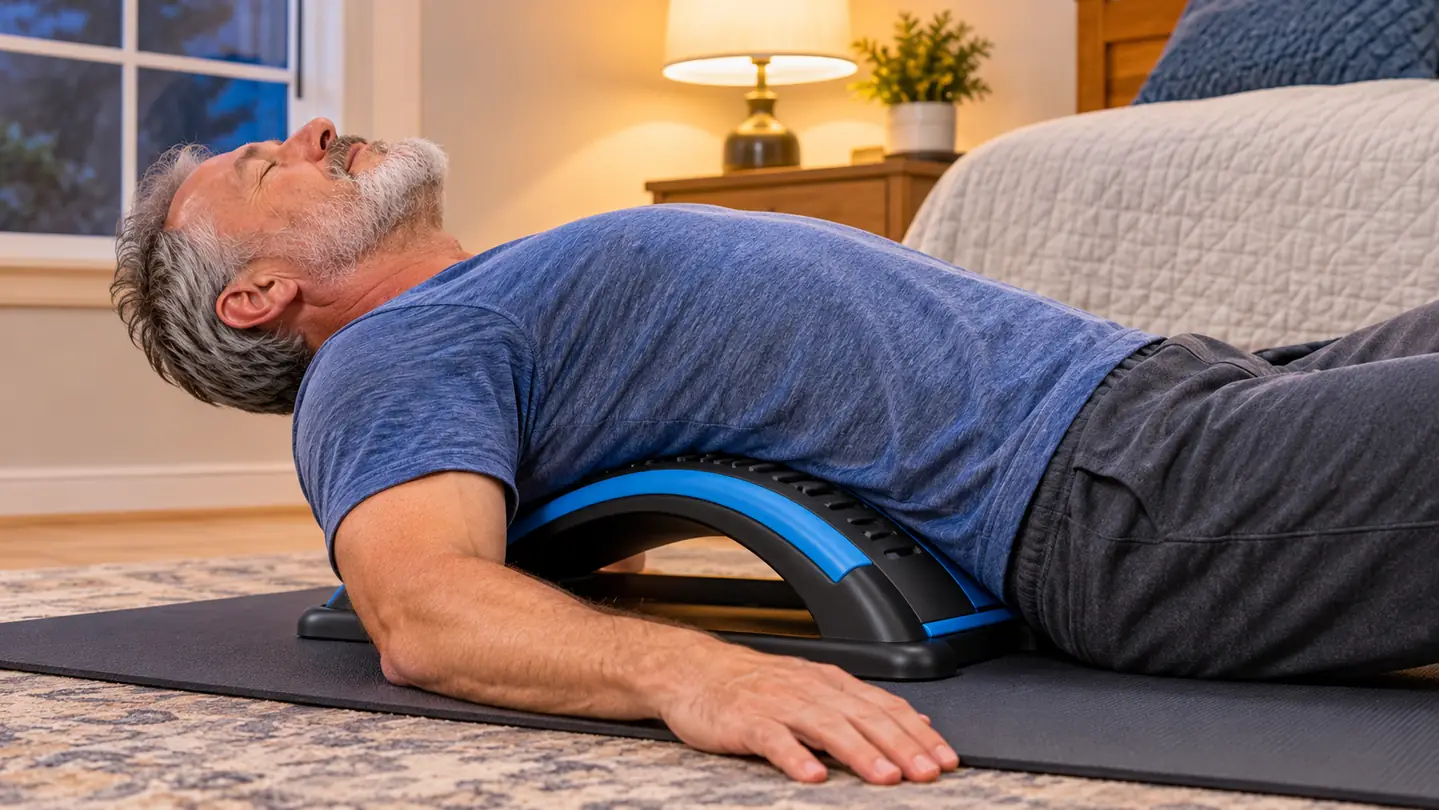
A dental stool and a dining chair both curl me forward. By seven in the evening my chest is short and my upper back is round, and I feel it most between the shoulder blades. Lying back over the stretcher puts me in the opposite position on purpose: supported, open, not hunched. I do not need a long session to notice the difference. I need enough time for my shoulders to drop away from my ears, and that is usually less time than I expect.
Ten minutes fits between dinner and the dishes
The reason this one stuck and the foam roller did not is scheduling, not comfort. My evening is a narrow slot: get home, start dinner, eat, clean up, and then I am done. Ten minutes is short enough to sit in that gap without negotiating with myself. I set the stretcher on the mat while the kettle boils, use it, and put it back in the basket. No changing clothes, no wiping anything down, no hunting for shoes. If a routine needs more setup than that, I will not keep it.
No cord, no battery, nothing to charge
Nothing in my house has fewer moving parts. There is no cord to hunt for, no charge to remember, and nothing that beeps at me. My own body weight does the work. That matters on the nights when I am already tired enough to skip anything with a setup step. It also means I can leave it in the living room permanently without adding another cable to the tangle behind the side table. It is made of ABS plastic and feels like it: firm, plain, and not precious.
My own body weight sets the pressure
The first week I treated it like a contest and pressed down hard. That was a mistake, and my upper back told me so the next morning. Now the pressure comes from how much I let go into it. On a tight night I use a lower level and let the stretch happen slowly. On a better night I go up one. The adjustable levels are the whole control panel, which suits me. I do not need options. I need one thing I can make gentler without thinking about it.
At about a pound and a half, it follows me around the house
It weighs roughly 1.54 pounds, lighter than my biggest mixing bowl. It lives in the basket by the recliner, but it travels: bedroom floor on the nights my lower back is cranky from gardening, living room while I am watching something, passenger seat when Glenn drives and I have been leaning over patients all day. Nothing about moving it requires a plan. That is the real test for anything I keep past the first month.
The night I stopped treating the highest level as the goal was the night I started using it every single day.
The height adjustment means Glenn and I are not fighting over one setting
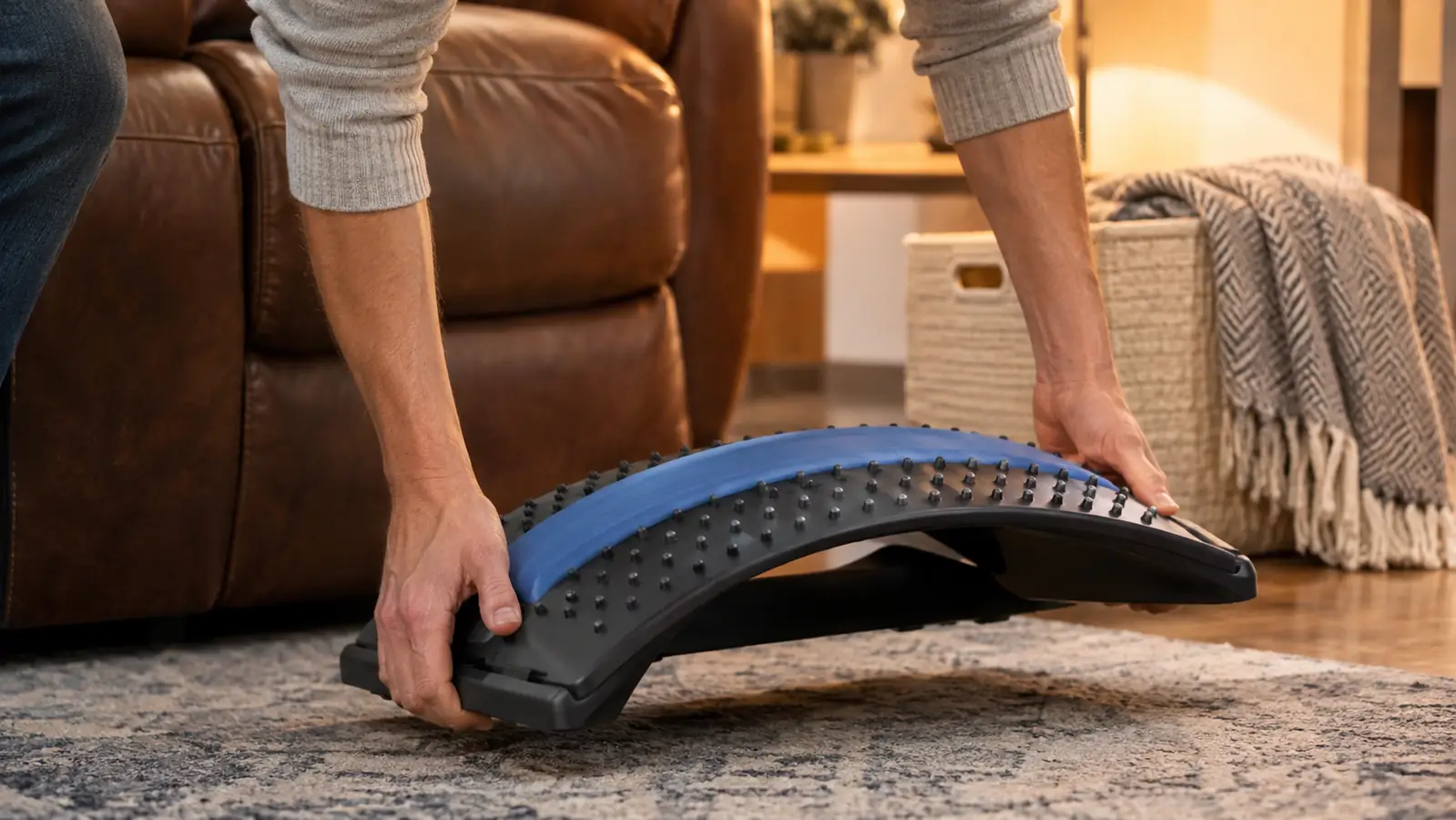
Glenn is 58, retired, and plays golf every weekend he can get away with. He borrows the stretcher for his shoulders and hips after a round, and he needs a different setting than I do. Because the level is adjustable, we are not stuck compromising on one position or buying a second device. He sets it, uses it, and I put it back where I like it. That sounds like a small thing. In a house with one of everything, it is not.
It reaches the space between my shoulder blades
This is the spot I cannot get to myself. My right shoulder sits high after a day of reaching across a patient, and no amount of doorframe stretching gets the middle of my upper back. Lying back over the stretcher puts steady pressure along the spine and lets the shoulder blades spread. I feel it first as warmth, then as a slow let-go. It is not a massage and I would not call it one, but it does what my own hands cannot do from the outside.
It gave my evening a fixed ten-minute marker
I am not a routine person. I have bought three things that were supposed to become habits and did not. This one became one because it is timed by feel rather than a clock. I lie down, breathe out, and stay until my back stops arguing. Some nights that is four minutes. Some nights it is twelve. Having a marker at the end of a workday tells my body the day is over, and that has been worth more than I expected.
It works on the bed, in the chair, and in the car
The listing calls it a device for bed, chair, and car, and I have used it in all three. On the bedroom mat it is the deepest stretch. In the recliner it is milder, more of a lean-back while the news is on. In the car it is the short version while we are parked, which is the only way I would use anything in a car. I do not cart it everywhere, but knowing it fits more than one place means I do not skip a night just because I am not in my usual spot.
It showed me which nights to stop and call someone
About four months in I had a week where the stretch made my neck worse instead of better. I stopped, called my doctor, and had it checked. It turned out to be a flare from clenching, not the stretcher, but I am glad I did not push through it. Any tool that helps you also teaches you where your edge is. I use it four or five nights a week now and skip it entirely on the days my body says no. That is not a failure. That is the point.
What I'd Skip
I would skip buying anything else until the Magic Back Support board earns its place in your week. The foam roller was the wrong tool for my upper back. It is better for legs and hips, and the difference is worth reading up on before you spend twice. The percussion gun is fine on my calves and useless on the spot between my shoulder blades. What I would also skip is the urge to start at the highest level because you are impatient, which is exactly what I did and regretted for two days.
And one more, because I would rather say it plainly than sell you something: skip using a stretcher as your only plan if the pain is sharp, travels down an arm, or wakes you up at night. That is a doctor's appointment, not a stretching session.
One board, one basket, ten minutes a night
The Magic Back Support stretcher is the plainest tool I own and the one I use most. Adjustable levels, no power, light enough to move from the recliner to the mat without thinking.
Amazon Check Today's Price on Amazon →