For twenty-six years I have spent my working days bent forward over other people's teeth. My neck goes one way, my right shoulder goes the other, and by seven in the evening my upper back feels like a drawbridge that never came all the way down. I have tried the obvious remedies. A tennis ball against a wall, which works until it slips. A foam roller, which I still use for my calves. Floor stretching, which I do badly and briefly and then stop. What I wanted was something that would open my mid-back without me having to think too hard about it at the end of a long day. About eight months ago I bought the Magic Back Support Back Stretcher for exactly that reason.
Eight months is long enough to know whether a tool earns its place in the canvas basket beside my recliner or gets quietly moved to the closet. This one is still in the basket. That is not the same as saying it fixed anything, and I will not pretend otherwise. I am a dental hygienist, not a physical therapist, and what follows is one person's record of what a hard plastic arch does to a tight back when you use it most evenings for the better part of a year.
The Quick Verdict
Simple, sturdy, and genuinely useful if you lie on it correctly for two minutes at a time. It is not comfortable, not gentle, and not a replacement for anyone who needs real treatment.
Amazon Check Today's Price →If your mid-back feels welded shut by four in the afternoon, this is the simplest thing I have found that opens it
A molded arch, 1.54 pounds, no power and no battery. Two minutes on the bedroom floor most evenings is the entire routine.
Amazon Check Today's Price on Amazon →How I've Used It
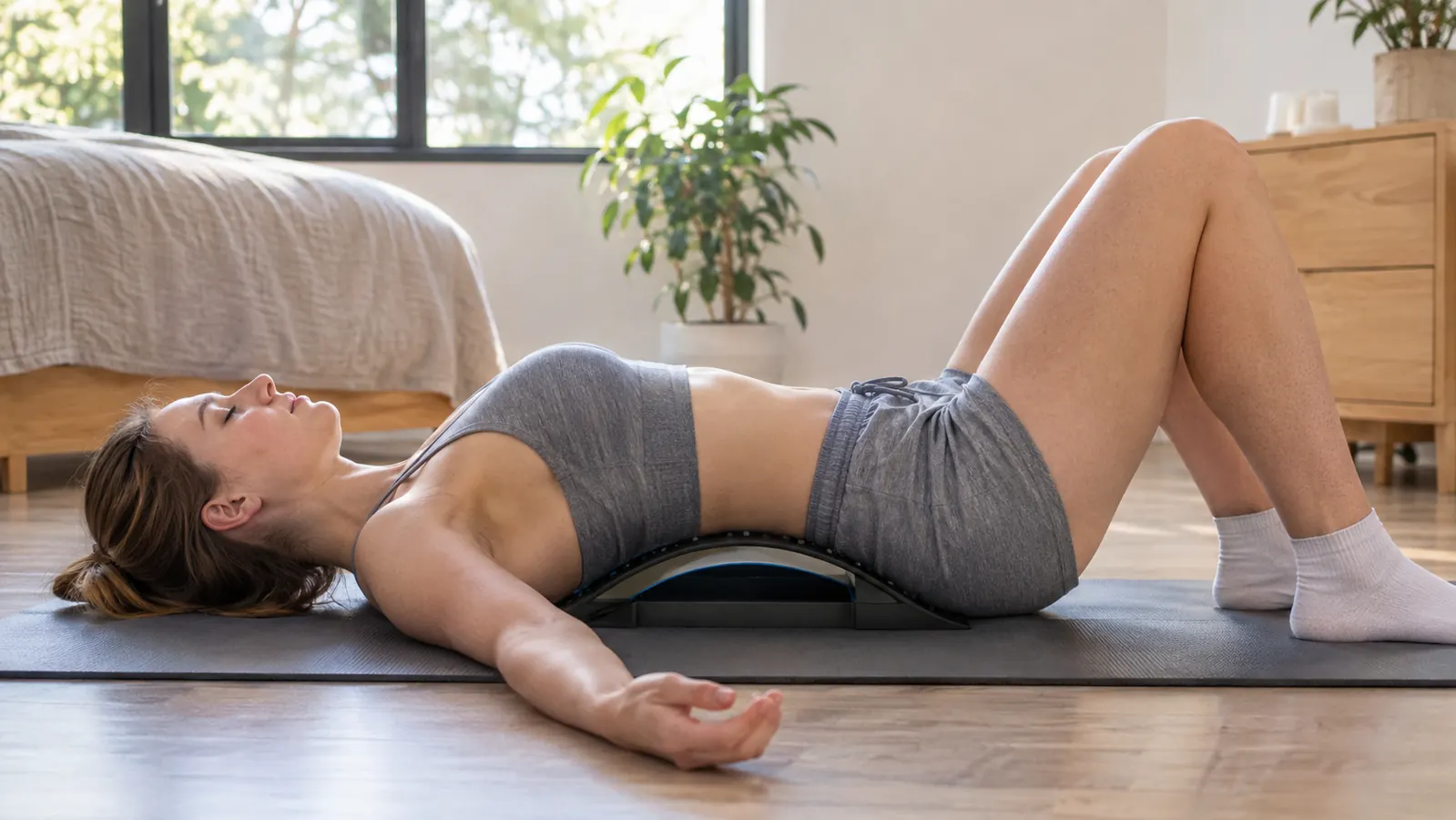
The routine is not complicated. Most evenings I unroll a mat on the bedroom floor, set the Magic Back Support Back Stretcher down with the arch running across my spine rather than along it, and lie back over it for two minutes. Then I get up, walk around the room once, and if my back is behaving I do it a second time later in the evening. That is the whole protocol. No strap, no timer, nothing to charge. The device is a molded ABS board weighing 1.54 pounds, and it does nothing at all unless your own body weight is doing the work.
Before this I tried a rolled-up yoga mat, which is the poor woman's version of the same idea. I would roll it tight, tape it shut, lie back over it, and within a minute it had flattened under my weight and I was essentially lying on the floor. A rolled towel did the same, only faster. That is the specific thing the molded ABS board solves: it does not compress. Whatever level you set is the level you get for the whole two minutes, which sounds like a small detail until you have spent a month re-taping a mat into shape every evening and getting less out of it than you put in.
The first week I used it every single night and regretted it. My back was sore in a dull, spread-out way that had nothing to do with the good soreness you get after a long walk. I stopped for four days. When I came back I cut it to two minutes, three or four evenings a week, and the soreness settled. That is the single most useful thing I can tell you about this tool: it is something you have to under-use at the start. The people who bounce off it, I suspect, went at it the way I did in week one.
What It Actually Is, and What It Isn't
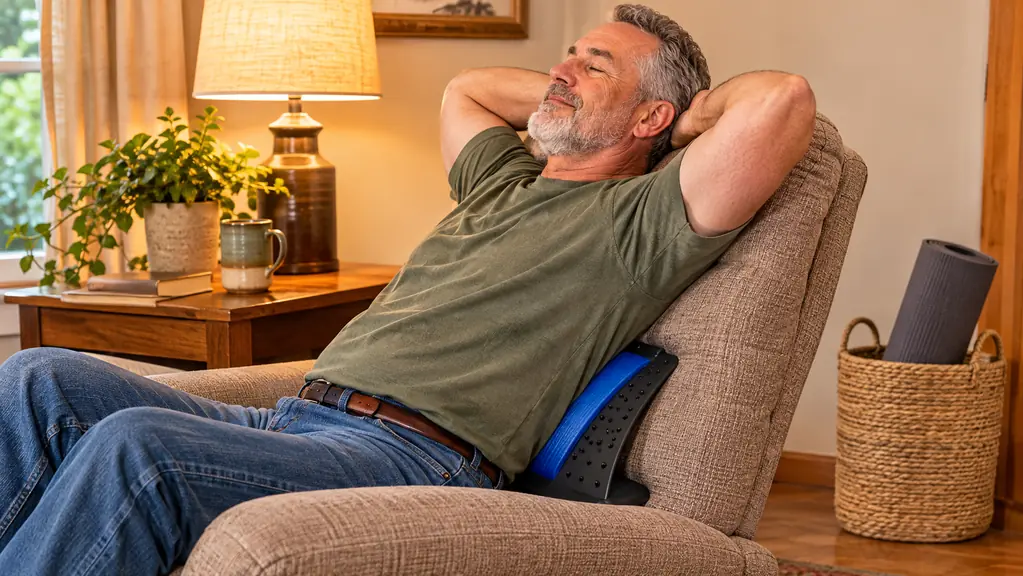
Strip away the packaging and you have an arched board molded from ABS plastic, measuring 6.3 by 3.94 by 0.71 inches and weighing 1.54 pounds. It has multiple levels, which in practice means a set of positions along the underside that change how high the arch sits when you lie on it. The listing calls it height adjustable and that is accurate. It is a passive device. No motor, no heat, no vibration, no power and no battery of any kind, which is why the brand makes a point of the fact that it costs nothing to run and nothing to recharge.
What it is not: it is not a machine that moves. The listing classifies it as a massage roller, but any movement comes from you shifting your weight along the arch, not from the device. Nobody is going to mistake this for a percussion gun. It is closer to a shaped piece of floor than to a tool with a motor. For some people that is the entire appeal, because there is nothing to break and nothing to plug in. If you want something that does the work for you while you watch television, this is the wrong purchase and you will be disappointed by Friday.
The Levels, and Why I Started on the Wrong One
For the first month I used the highest setting, because I assumed harder meant better. It does not. On the highest level the arch sits up so far that my lower back came off the floor entirely and my ribs took the pressure instead of my spine. My shoulders crept up toward my ears, my neck tensed, and I got up tighter than when I lay down. When I dropped to the lowest level and put a folded towel under my head to stop my chin tipping back, the whole thing changed. I could breathe, my shoulders stayed down, and I stayed on it for the full two minutes without wanting to get off.
For the first three weeks I also kept a note on my phone of how my back felt the morning after. That sounds fussy. It was the only way I could tell whether a change had helped, because by seven in the evening I had forgotten what the morning had even been like. The pattern was clear by the end of that month: the higher levels made the next morning worse, the lower levels made it the same or slightly better. I would not have believed it without writing it down.
Now I move between the lower levels depending on the day. After a long Saturday in the garden, when my lower back is the sore part, I go lower and let the arch do less. After a week of leaning over the dental chair, when the tightness sits between my shoulder blades, I go up one notch. The levels are the only adjustment the device has, so learning to use them well is basically the entire skill. Most people who give up on a tool like this give up in the first two weeks, and I would guess most of them started too high.
On the highest level my lower back came off the floor and my ribs took the pressure. Dropping down was the difference between a tool I used twice and a tool I still reach for eight months later.
What Two Minutes Actually Does
Here is what I can honestly say after eight months. When I lie on it for two minutes after a day of leaning over patients, my upper back feels looser when I stand up, and that looseness lasts through dinner. It does not last until morning. On the days I skip it, my mid-back is stiffer by evening, and I notice that more now than I did before I started. What I cannot tell you is whether the device is doing something my floor stretching was not already doing. It might simply be that it makes me lie down and breathe for two minutes, which I was not doing before.
Take one Saturday in October. I spent four hours in the garden cutting back the last of the summer growth, which is four hours of bending, kneeling and standing back up. By four in the afternoon my lower back was tight enough that I moved like my own mother used to. I lay on the lowest level for two minutes, got up, walked to the kitchen and back, then lay down again. The second two minutes did more than the first. By dinner I could stand at the counter without thinking about it. That is the whole benefit, and it is not nothing, but it is also not a cure.
I have kept it because I actually use it. That is a low bar, but it is the bar most of these things fail. The roller I bought before this one lives in the closet. The strap that hangs over a door is in a drawer somewhere. This one sits where I can reach it from the recliner, it needs no setup, and there is nothing to charge, so there is no excuse not to. Two minutes is short enough that I do it even when I am tired, and that consistency is probably worth more than any particular feature of the design.
The Chair and the Car
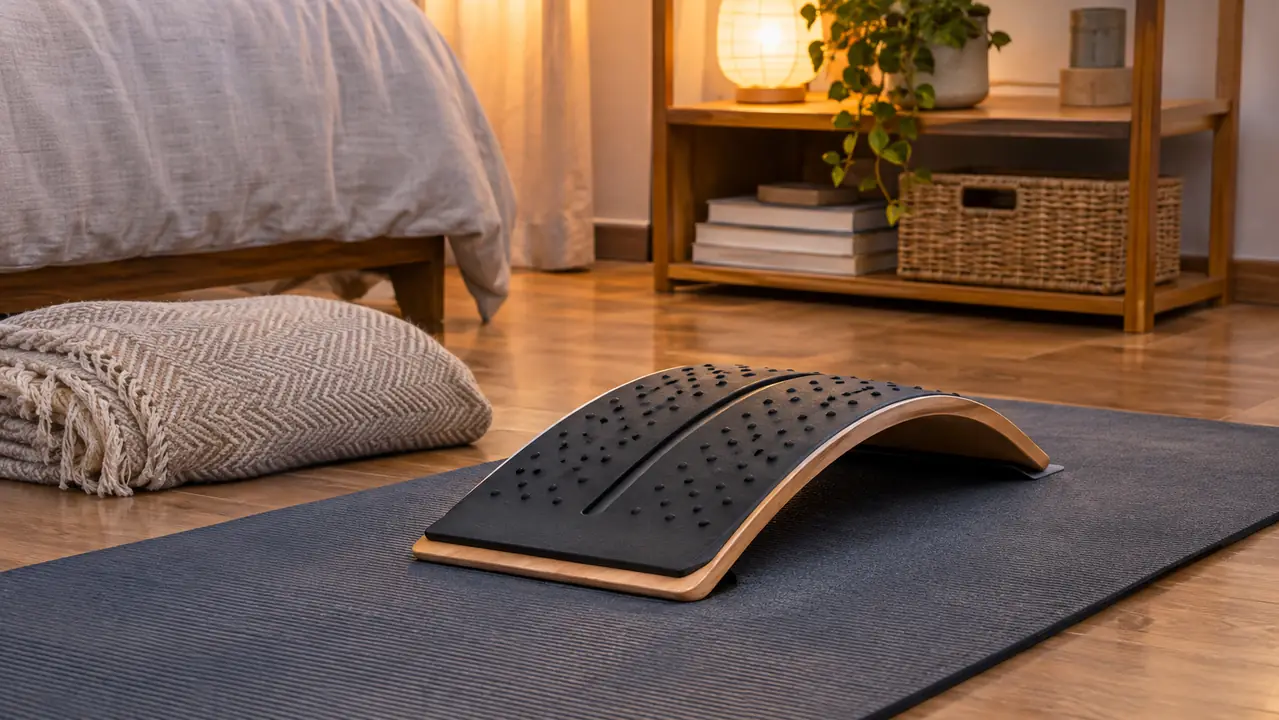
The listing mentions bed, chair and car, and I want to be straight about that. I have never got anything out of it on a bed, for the reason above: the mattress gives and the arch disappears into it. The chair version works differently. I set the Magic Back Support stretcher against the small of my back in the recliner and lean into it while I read, and it gives a steady press against the lower back that I like after a day on my feet. It is not the same as lying on it. I would not describe it as a stretch at all. It is more like a firm hand pressed flat against your back.
Glenn uses it in the car. He is fifty-eight, retired, and plays golf most Saturdays, and by Sunday his lower back is complaining. He wedges the device behind him in the driver's seat on the way to the course and says it takes the edge off before he has even teed off. I have not tried it in the car myself because I am usually the one driving. Take his word for what it is worth, which is a golfer's word and not a clinician's.
Where It Falls Short
The honest downsides. It is hard plastic and it feels like hard plastic. There is no padding anywhere on it, and on the higher levels the edge of the arch can dig into the muscles beside the spine instead of pressing evenly along them. The first thirty seconds are unpleasant, every time, and I have not got used to that in eight months. I have simply accepted it as the price of the two minutes that follow. If you have a low tolerance for pressure on your back, this is not the gentle tool you are hoping for, and no amount of correct technique will make it soft.
There is one more thing worth knowing. The board is small enough to shift, and it will shift. On the higher levels, if you move your weight even slightly, the whole thing pivots under you and the pressure jumps from one side of the spine to the other. The first few times that happened I tensed up hard, which is the opposite of what you want when you are trying to let go of something. Now I set it down, get into position slowly, and keep my feet flat and my weight even. It took about a month before that became automatic.
It is also small in the other sense. At 6.3 by 3.94 inches and 1.54 pounds it is genuinely portable, which is the point, but small means it covers one section of your spine at a time. You are not getting a full-length back stretch from a single position. I slide it up and down my spine depending on which part is complaining, and working that out took me a few weeks. Nothing about the device teaches you how to use it. The learning is all trial and error, and the errors are not especially comfortable ones.
What I Liked
- Molded ABS with no moving parts, so there is nothing to wear out
- No power and no battery, which means nothing to charge and nothing to plug in
- Multiple levels let you control how hard the arch presses into your back
- Light at 1.54 pounds, so it moves between the bedroom floor and the recliner easily
- Two minutes is short enough that I actually keep doing it
Where It Falls Short
- Hard plastic with no padding anywhere on it
- Uncomfortable for the first thirty seconds, every single time
- Does almost nothing on a soft surface such as a bed
- Small, so it works one section of the spine at a time
- Starting on a high level is a common and genuinely painful mistake
Who This Is For
This is for someone with a tight mid-back and a low tolerance for complicated routines. If you already know that lying over something firm helps you, and you want that thing to be light, simple, and free of batteries, the Magic Back Support Back Stretcher does the job. It suits people who work bent forward, which includes desk workers and anyone who stands and leans all day. It also suits anyone who tried a foam roller and found it too vague, because a fixed arch gives you a shape to work against instead of a soft cylinder that rolls away from you every time you shift.
Who Should Skip It
Skip it if your back pain came on suddenly, travels down a leg, or wakes you up at night. That is a conversation with a doctor, not a purchase. Skip it if you have an injury, a fracture, or a disc problem nobody has looked at, because pressing a hard arch into an undiagnosed back is a poor idea. Skip it if you need something soft and yielding, and skip it if you want a device that does the work for you, because this one waits for you to do all of it. I checked with my own doctor before I started using it regularly, and I would say the same to anyone whose back has been angry for a while.
Eight months in, this is the one back tool still sitting in my basket by the recliner
No motor, no battery, no routine to memorize. Lie back over it for two minutes and see whether your mid-back lets go.
Amazon Check Today's Price on Amazon →