
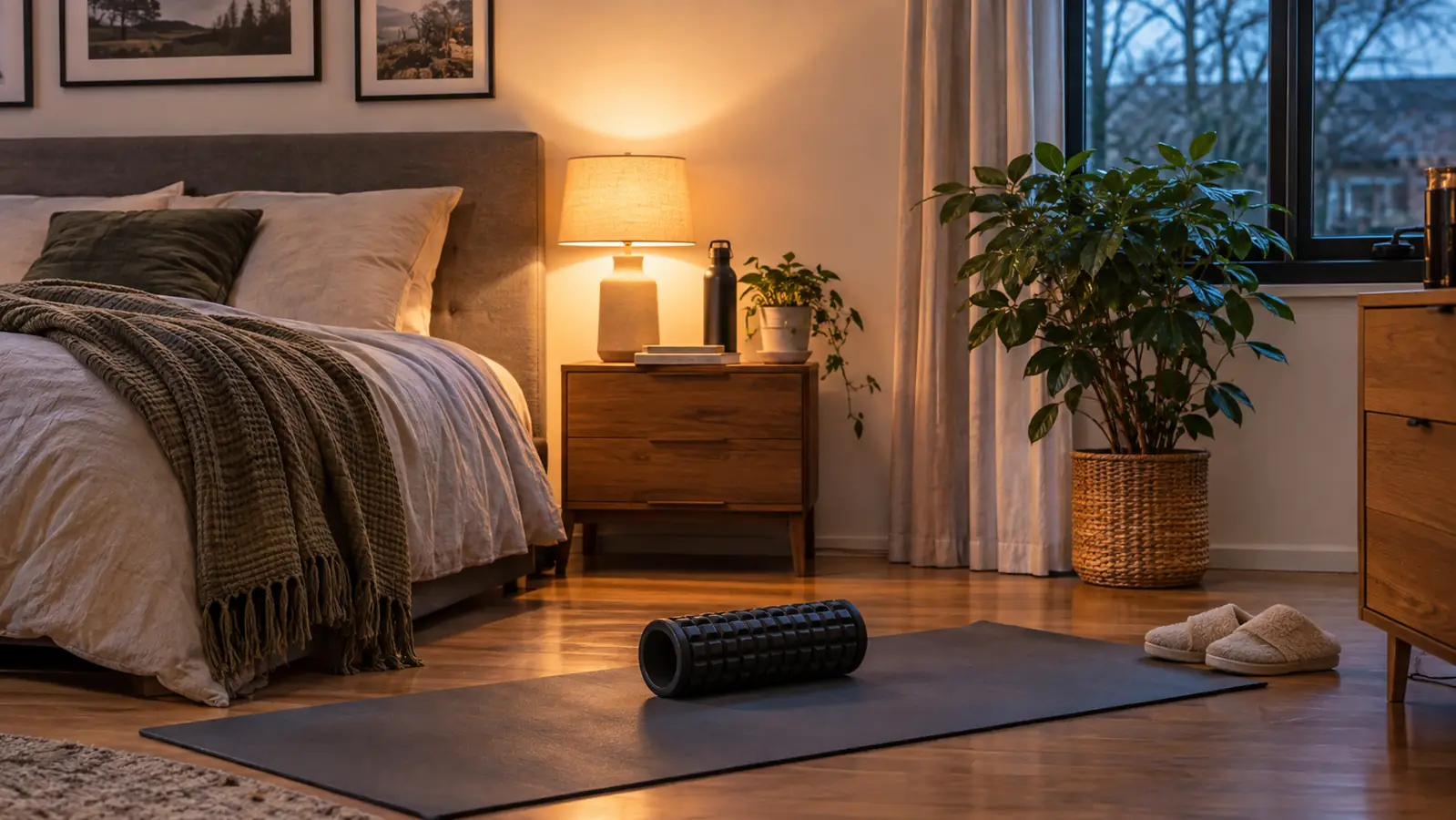
For about a year, the foam roller lived in the front hall closet, standing behind the vacuum cleaner and a bag of gardening gloves I never remember to carry outside. I had bought the TriggerPoint GRID roller after a Tuesday in the operatory when my right shoulder would not come down from my ear. I used it once, on the living room rug, decided it hurt, and put it away. That was the entire test. One attempt, no instruction, no patience.
Some context, because the tool only makes sense against the body using it. I am a dental hygienist in Greensboro, North Carolina, and I have spent 26 years leaning over a dental chair with my shoulders rounded forward and my neck craned toward a patient. My upper back and right shoulder have been tight since roughly 2009. I also walk about three miles most mornings and I garden on weekends, which leaves my calves cranky on Sunday night and my lower back stiff on Monday. Nothing dramatic. Just the ordinary wear of a body that does its job.
My first attempt went badly, and I describe it because I think it is why so many of these end up in closets. I put the roller under my lower back and ran the full weight of my body up and down it as fast as I could stand. I held my breath. I went over the same spot a dozen times, hard, chasing a feeling. By the next morning I was sorer than before and I decided the tool did not work for me. The tool was fine. I was using it like a scrub brush on a sunburn.
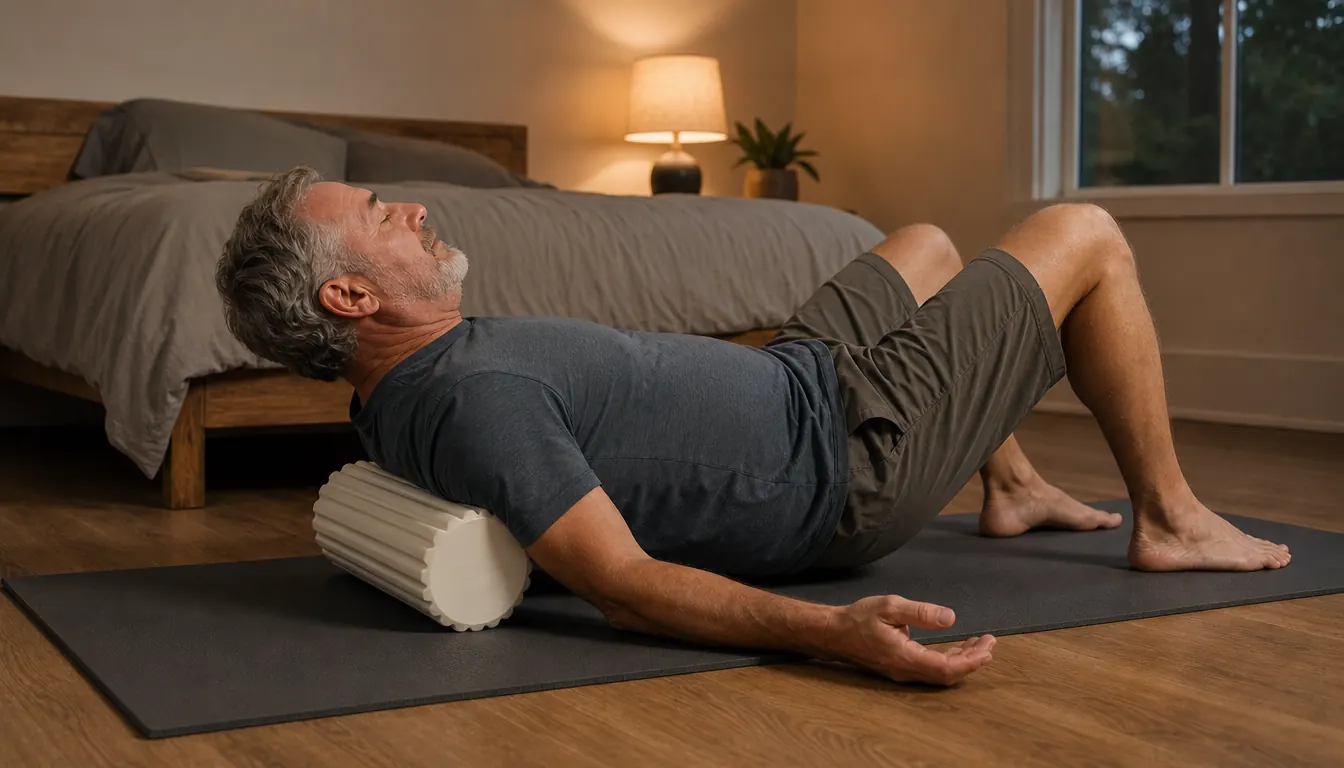
What changed was a conversation, not a purchase. A friend who teaches Pilates told me to slow down and start at the edges instead of the middle. So on a Thursday evening I unrolled a yoga mat on the bedroom floor, set the TriggerPoint roller under my upper back, and let my weight settle onto it about an inch at a time. Ten seconds in one place. Then a small shift. Then another. I stayed away from my lower back entirely that night. Ten minutes later I stood up and noticed my shoulder blades felt less glued down.
Glenn, my husband, is 58 and retired, and he golfs most weekends. He came in one Saturday in April, saw the roller on the bedroom floor, and asked whether it would help his hips. Now he uses it on his shoulders and the outside of his hips before he stretches. He is rougher with it than I am. He also keeps a note on his phone about which side hurts more, which is the most Glenn thing I can tell you.
Ten minutes on a bedroom floor did more for my upper back than a year of telling myself I should stretch.
It spent a year behind the vacuum. Now it lives beside the yoga mat.
Same roller, different approach. If you want to see what the 13 inch GRID runs at today, the listing is right here.
Amazon Check Today's Price on Amazon →What I notice most is the surface. It is not one smooth tube. The GRID has ridges and flatter panels and small nodules across it, and TriggerPoint calls the arrangement Distrodensity Zones, which is a name for something real: parts of the surface press harder than others. On my upper back the flat sections are where I can breathe, and the ridged parts are where I slow down and think about it. It is rated extra firm, and it is. I did not believe that rating until a friend lent me a softer roller that felt like lying on a pool noodle.
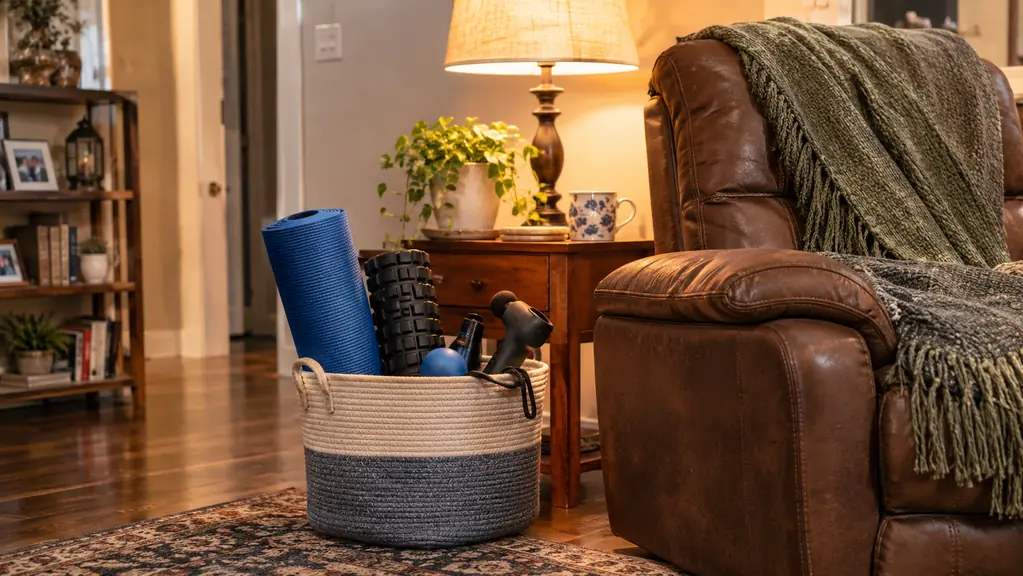
Most nights I use it for six to ten minutes before bed. Calves first, because three miles of walking leaves them tight, then the upper back, then a slow pass along the outside of my thighs. I am not chasing a feeling. I am doing the same unremarkable thing most evenings, and the unremarkable thing is what kept it out of the closet. It weighs about a pound, so moving it from the living room to the bedroom floor and back costs me nothing.
It does not fix anything, and I want to be plain about that. I am not a massage therapist, a physical therapist or a doctor. Rolling does not undo 26 years of leaning over a chair. It makes the evening more comfortable and the morning easier, and those are smaller claims than most of what you read. When something is genuinely injured, I call my doctor. Pressing hard on a strained muscle is not treatment. It is just pressure on a strain.
Two things I would change. Extra firm means extra firm, and on a bad night the ridges are too much, so I fold a towel over the roller and go lighter. And the 13 inch length is right for my back and thighs but short for lying along the spine, which I do not do anyway. It also took me a few weeks to stop bracing my shoulders every time I got on it.
What I'd Tell You If We Were Sitting at My Kitchen Table
I would tell you not to buy anything until you have tried the slow version on something you already own. A rolled towel will do. Most people I know who hate foam rollers are doing what I did on the living room rug that first night: too fast, too hard, too much weight on a spot that was already irritated. If the slow version helps and you want a surface that holds up, the TriggerPoint GRID is worth a look. Get on it for five minutes, not twenty. Breathe. Stay off the lower back until you know what you are doing.
And I would tell you the honest part. This is a piece of dense foam with a shaped surface. It is not going to change your life, and it does not need to. It needs to be within reach at nine in the evening when your shoulders are up around your ears, and it needs to be firm enough to be worth lying on. Mine is. That is why it is on the bedroom floor instead of behind the vacuum cleaner.
The ordinary evening version, which is the one that worked
Thirteen inches, extra firm, and close at hand. Check the current price and the sizing on Amazon.
Amazon See It on Amazon →