Short answer first, because I wish someone had handed it to me two years ago. If the tight spot has an address, the TriggerPoint GRID Foam Roller is the one I reach for. If you are brand new to rolling and every part of you feels tender, a smooth foam roller will treat you better for the first few weeks. I am Delphine Marsh, I have spent 26 years leaning over a dental chair, and my upper back, neck and right shoulder have been complaining about it since roughly 2015. I am not a therapist and I will not pretend to be one. I am a 54-year-old woman in Greensboro who bought both kinds of roller, used both of them badly at first, and eventually worked out which one belongs where.
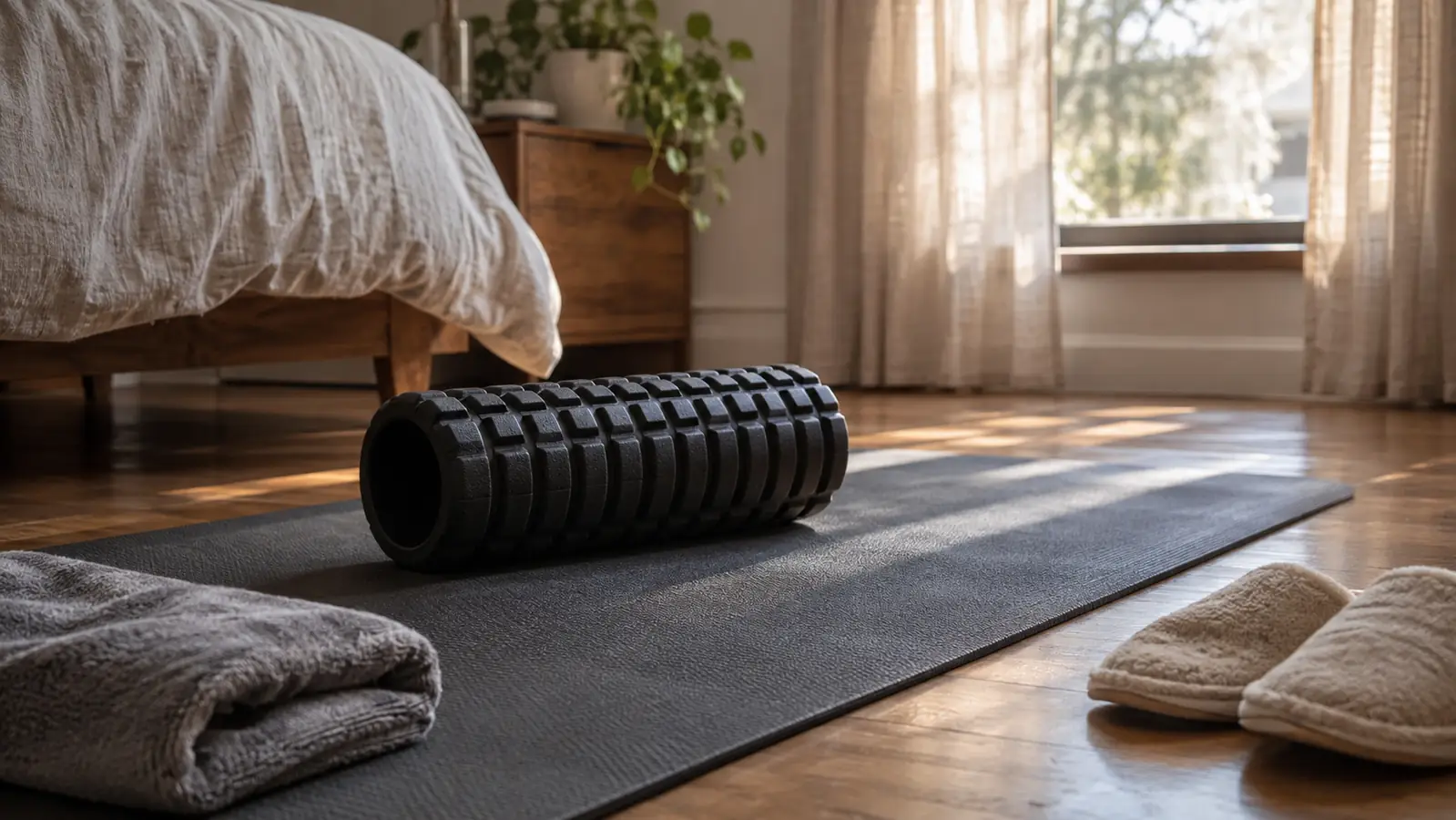
Here is the plain difference. The TriggerPoint GRID has a three-dimensional surface, a pattern of ridges and nodules the listing calls Distrodensity Zones, and it is an extra firm foam roller that measures 13 inches and weighs about 1.1 pounds. A smooth foam roller is exactly what the name says. One even surface, no texture, usually a little softer. That single difference decides almost everything else. Texture means the roller can press into one band of muscle while the rest of your back rests between the nodules. No texture means even pressure across everything it touches, which is either exactly what you want or exactly what you cannot tolerate yet, depending on how sore you are on a given Tuesday.
| TriggerPoint GRID | Smooth Foam Roller | |
|---|---|---|
| Surface | Multi-density GRID of ridges and nodules, so the pressure changes as you move | One smooth surface, the same pressure everywhere |
| Pressure control | You can shift onto a ridge for more, or onto a flat zone for less | You control pressure with body weight and nothing else |
| Comfort on tender spots | Extra firm ridges are a lot on a first pass | Forgiving and spread out, easy to lie on |
| Broad even coverage | Textured by design, so contact is uneven on purpose | Even contact across a wide area without thinking |
| Holding its shape | Extra firm foam that has not gone soft in two years of use | Softer foams dent in the middle over time |
| Learning curve | About two weeks before it stopped feeling like a punishment | Nothing to learn, you lie on it |
| Storage and moving it around | 13 inches and about 1.1 pounds, so it goes from mat to wall to recliner easily | Long ones live on the floor and stay there |
| Best for | One specific tight area you can point to | General soreness and a first roller |
Where the TriggerPoint GRID Wins
The GRID wins on the thing most of us actually have: a tight spot with a location. My right shoulder blade has a place the size of a thumbprint that has been there for years. On a smooth roller I have to press my whole upper back into one even surface and hope the sore part gets the message on the way past. On the GRID I can lie slightly off center and let a ridge sit right under that spot while the rest of my back rests in the gaps. That is not a small difference. It is the difference between ten minutes of vague rolling and ninety seconds that lands.
It also holds up. Mine is two years old, it has been sat on, dropped, and borrowed by my husband Glenn for his hips after golf, and the foam has not gone soft in the middle the way the plainer roller I bought first did. The listing calls it extra firm and that is accurate. It does not give under you. If you want a tool that feels like a massage therapist's forearm rather than a cushion, this is the one, and after a couple of weeks of use my neck and shoulders stopped feeling like they needed a professional appointment every time they got tight.
Here is a concrete example from a Tuesday in March. My right hip had been aching since a Saturday spent pulling ivy out of a flower bed, and the sore place was deep and specific, about the size of a half dollar, just behind and below the hip bone. On the smooth roller I rolled the whole side of that hip for eight minutes and got a vague warm feeling and nothing else. On the GRID I turned slightly toward my front, parked one of the larger nodules directly over that spot, stayed still and breathed out for about forty seconds. It was sharp, and then it was not, and the ache when I stood up was maybe half what it had been. That pattern has repeated often enough over two years that I have stopped being surprised by it.
Where a Smooth Foam Roller Wins
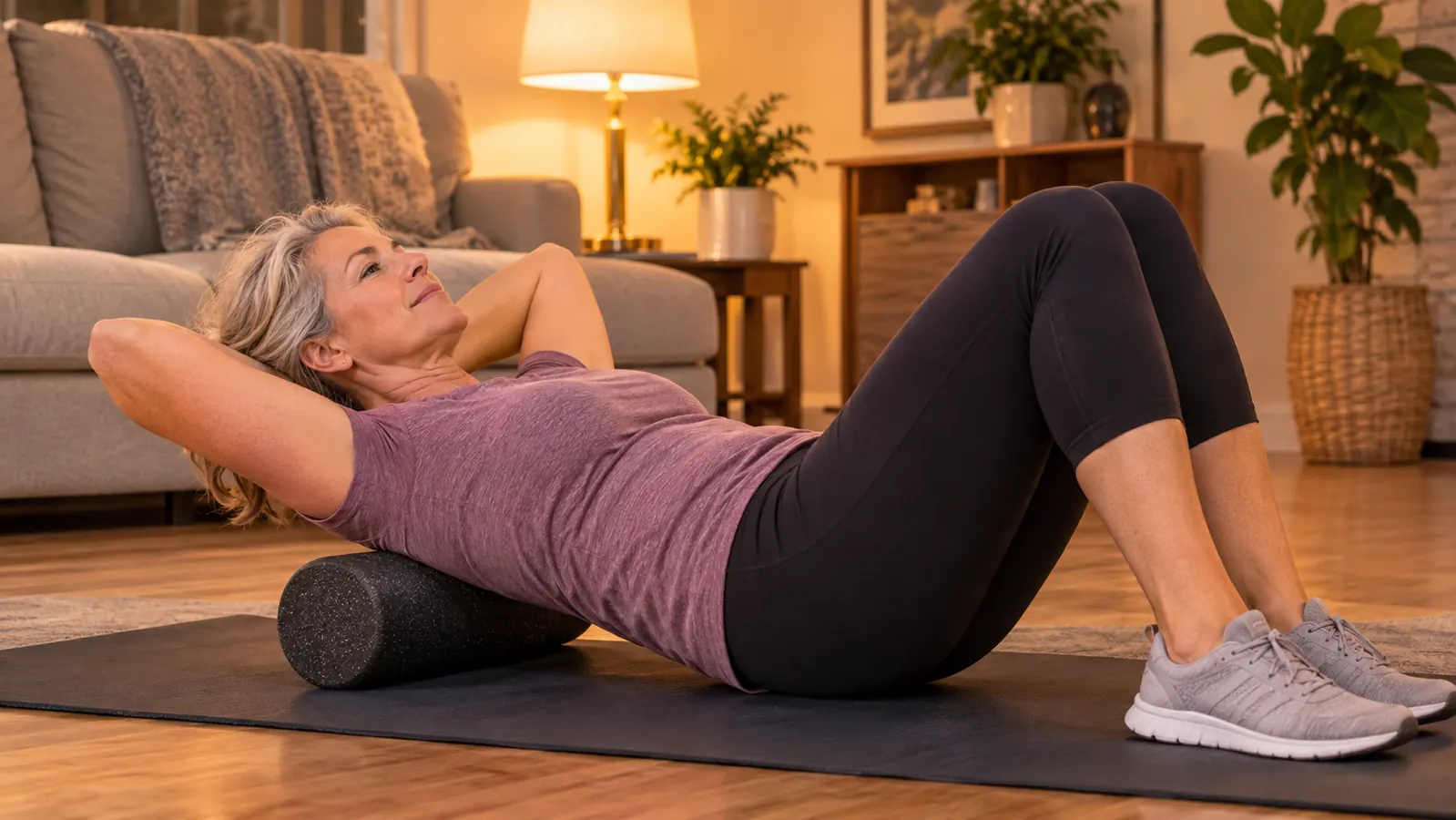
The smooth roller wins on everything to do with being new at this. When I started, my whole back felt like one bruise. A textured roller would have been a mistake, and honestly it was. I borrowed one, used it too hard, and spent two days feeling like I had been in a minor car accident. A smooth roller spreads the same gentle pressure across whatever it touches, so there is no ridge to land badly on and nothing to work out. You lie on it, you breathe, you move a few inches, you breathe again.
It also wins on wide, even areas. When my calves are sore from my three mile morning walks, I do not want texture. I want a long even surface I can run the length of a calf over without thinking about placement. Same for the outside of my thigh after a Saturday in the garden. And the smooth roller is the less expensive way to find out whether you even like rolling, which matters, because a lot of people buy a roller, use it twice, and put it in a closet behind the vacuum.
When I bought my first smooth roller I picked the longest one on the shelf, thinking more surface meant more value. It is about three feet long, and that turned out to be the wrong calculation for a two-story house. It does not fit in the canvas basket, it does not fit behind the recliner, and it lives on the floor of the guest room where I trip over it roughly once a week. Longer also means more awkward when you are trying to work one calf, because the far end swings around while you are balanced on the near end. If I were buying a smooth roller again I would get one close to the length of the GRID. A shorter roller is easier to angle, easier to put away, and the only thing the extra length bought me was stubbed toes.
If your tight spot has a name, start with the one that can find it
The TriggerPoint GRID is the roller that stays beside my recliner. Extra firm, 13 inches, and the surface that finally got into my right shoulder blade. Today's price and the current rating are on the listing.
Amazon Check Today's Price on Amazon →What the GRID Actually Feels Like to Use
Uncomfortable at first, and I want to be honest about that rather than sell you a fantasy. The first week I could manage about thirty seconds on my upper back before I wanted to get up and do something else. The ridges are not subtle. What changed it for me was slowing down. I had been rolling back and forth like I was scrubbing a countertop, which is what I had seen people do online. Once I stopped moving and let one nodule sit under the tight band while I breathed out slowly, the sensation went from sharp to useful in about twenty seconds.
The other thing I got wrong was where I put it. I started with the roller under my lower back because that is where I thought the problem was. It is not. My lower back tightness comes from my hip and my upper back, and rolling the lower back directly just made me stiff. Once I moved the GRID up under my shoulder blades and started on my hips first, the lower back complaints got quieter on their own. I am a dental hygienist, not a clinician, and that was my experience over about three months, not a treatment plan.
In practice it lives in a canvas basket next to my recliner in the living room, and I use it there in the evening standing against the wall for my neck and shoulder, and on the yoga mat on the bedroom floor for my upper back and hips. It moves between the two rooms without effort because of the size. Glenn takes it out to the garage on Sunday afternoons for his hips after golf and has never once put it back, which is its own kind of review.
Standing against the wall took me longer to figure out than lying on the floor. For my neck and the top of my right shoulder, I put the GRID between my back and the wall at roughly shoulder blade height, lean in with maybe a third of my weight, and roll slowly side to side. My first attempt I leaned in with everything, which is not a good idea on an extra firm surface against a wall, and I felt it near my collarbone for a day. A third of the weight is plenty. Two minutes there in the evening after the dishes does more for my neck than anything else I do, and it is the main reason the roller has never ended up in a closet.
The GRID let me put pressure on one band of muscle under my shoulder blade without pressing on everything around it, and that is the entire reason it stays by my chair.

When Neither Roller Is the Right Answer
There is a version of this where a foam roller is the wrong tool entirely, and I have lived in that version. If something hurts sharply rather than dully, if you have had a joint replaced, if you have numbness or tingling running down an arm or a leg, the answer is your doctor or a physical therapist, not a piece of foam on the bedroom floor. I say that as someone who spent four months rolling a shoulder that needed a different conversation with someone qualified. No roller, textured or smooth, was going to sort that out.
The working rule I use now is that rolling should feel like pressure I can breathe through. If I am holding my breath or bracing my shoulders up off the mat, I am pressing too hard, and with an extra firm roller that is very easy to do. Back off onto one of the flat zones between the ridges, or onto a smooth roller if there is one in the house, and stay still until the muscle gives a little. If it never gives, that is information rather than failure, and it is usually information that points toward a professional.
The ribs are where I got this wrong most often. Early on I rolled the GRID up my side, right over the rib cage, because it felt like the thing to do and the texture made it feel productive. It is not productive. The ribs do not have the padding to take an extra firm ridge, and I had a tender spot under my left arm for three days afterward. Bony areas want a flat surface or a very light touch, and the lower back wants neither roller pressed into it for long, at least in my case. That is not a rule from a textbook. It is a rule I wrote after a bad Wednesday.
What I Liked
- Puts pressure on one specific tight band instead of the whole back at once
- Extra firm foam has held its shape through two years of near daily use
- 13 inches and about 1.1 pounds, so it moves from mat to wall to recliner without a second thought
Where It Falls Short
- The ridges are a lot on a first pass and too much for a complete beginner
- Extra firm means bony areas like the ribs and the lower back need care and a lighter touch
- At 13 inches it takes more passes to cover a long area like the full back
Who Should Buy Which
Buy the TriggerPoint GRID if you can point to the tight spot. If you know it is the right shoulder blade, the outside of the hip, or the calf that cramps on the third mile, the GRID will get into it in a way a flat surface cannot, and the extra firm foam will still be firm a couple of years from now. Buy it if you have rolled before and the smooth roller has started to feel like nothing much is happening. Buy it if you want one tool that does the specific work rather than two that do the general work.
Buy a smooth roller if you are starting out, if your whole body is tender, or if you mostly want to roll a large area without thinking about placement. Buy it if two people in the house will use it and one of them will not read anything first. It is the tool I should have started with, and I would have saved myself two sore days and a week of avoiding the mat altogether.
If you can only have one and you are somewhere in the middle, I would get the GRID and a hand towel. Fold the towel over the roller for the first two weeks to soften the ridges, then take it off when you are ready for the real surface. That is exactly how I got Glenn onto it without a single complaint, and it is the cheapest version of having both.
The one that stays beside my recliner
Extra firm, 13 inches, and a surface that finally got into the spot under my right shoulder blade. If your tight area has a location, this is the roller built to reach it.
Amazon Check Today's Price on Amazon →